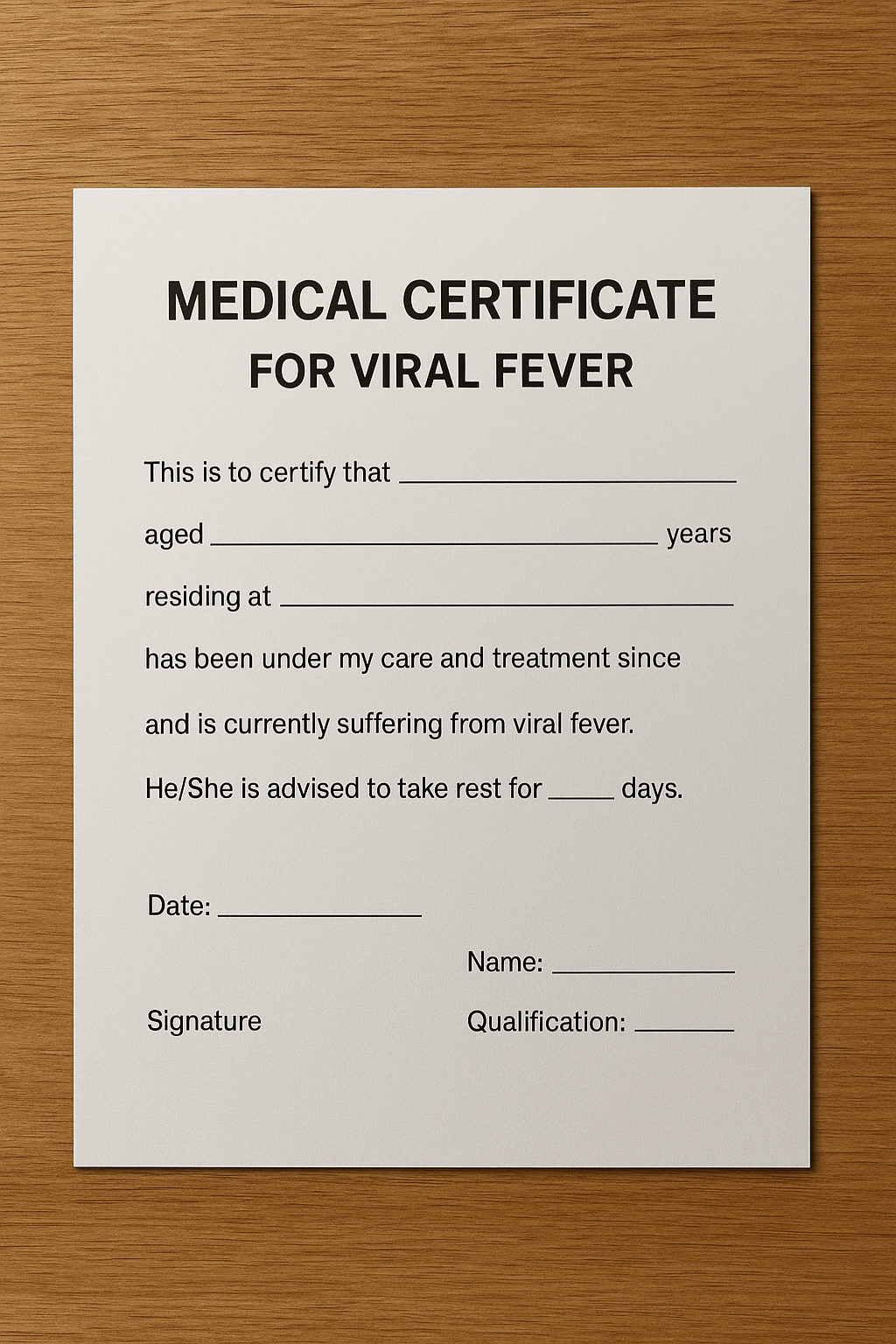
Medical Certificate for Viral Fever: A Complete Guide for Patients and Employers
Medical Certificate
Viral fever is one of the most common health conditions that affects millions of people worldwide, particularly during seasonal changes and outbreaks. When dealing with viral fever, obtaining a proper medical certificate becomes crucial for both personal health management and professional responsibilities. This comprehensive guide will walk you through everything you need to know about medical certificates for viral fever, from understanding the condition to navigating workplace policies.

Understanding Viral Fever
Viral fever is a broad term used to describe elevated body temperature caused by viral infections. Unlike bacterial infections, viral fevers are caused by viruses that invade the body’s cells and reproduce, triggering the immune system’s response. The body raises its temperature as a natural defense mechanism to create an unfavorable environment for the virus.
Common Symptoms of Viral Fever
The symptoms of viral fever can vary depending on the specific virus and the individual’s immune response. However, typical symptoms include:
- Elevated body temperature (usually between 100°F to 104°F or 38°C to 40°C)
- Fatigue and weakness that can be debilitating
- Body aches and muscle pain affecting multiple areas
- Headache ranging from mild to severe
- Chills and sweating as the body temperature fluctuates
- Loss of appetite and general malaise
- Nausea or vomiting in some cases
- Respiratory symptoms like cough, sore throat, or runny nose
- Skin rash in certain viral infections
These symptoms can significantly impact daily activities and work performance, making medical documentation essential for proper treatment and workplace accommodation.
The Importance of Medical Certificates
A medical certificate, also known as a doctor’s note or sick leave certificate, serves multiple critical purposes in healthcare and employment contexts. For viral fever cases, these documents provide official validation of the patient’s condition and necessary recovery period.
Legal and Professional Requirements
In most jurisdictions, employees have the right to sick leave when experiencing genuine health issues. Medical certificates serve as legal documentation that protects both employees and employers. They provide evidence that the absence from work is medically justified and not merely voluntary.
Many employment contracts and company policies require medical certificates for sick leave periods exceeding a certain duration, typically ranging from one to three consecutive days. Some organizations may require certification from the first day of illness, particularly in roles where public health or safety is a concern.
Insurance and Benefits Claims
Medical certificates are often required for insurance claims related to sick leave benefits, disability claims, or medical expense reimbursements. Insurance providers use these documents to verify the legitimacy of claims and determine appropriate compensation levels.
What Should a Medical Certificate Include?
A comprehensive medical certificate for viral fever should contain specific information to be considered valid and useful. Healthcare providers must ensure all necessary details are included to meet legal and administrative requirements.
Essential Components
Patient Information: Full name, date of birth, and contact details of the patient must be clearly stated. This information should match official identification documents to prevent fraud or misuse.
Healthcare Provider Details: The certifying doctor’s name, medical license number, clinic or hospital name, address, and contact information. This allows for verification of the certificate’s authenticity if required.
Date of Examination: The specific date when the patient was examined and diagnosed. This establishes a timeline for the illness and helps determine the validity period of the certificate.
Diagnosis: A clear statement indicating “viral fever” or the specific viral condition if identified. While detailed medical information isn’t always necessary, the diagnosis should be sufficient to justify the recommended treatment and time off work.
Duration of Illness: The estimated period during which the patient will be unfit for work or normal activities. This should include both the current symptomatic period and any necessary recovery time.
Recommendations: Specific recommendations such as bed rest, isolation, increased fluid intake, or follow-up appointments. These details help employers understand the nature of the required accommodations.
Return to Work Date: An estimated date when the patient is expected to be fit to resume normal duties, though this may be subject to reassessment.
Doctor’s Signature and Stamp: Official signature and medical practice stamp to authenticate the document.
Additional Considerations
Some medical certificates may include restrictions on activities, recommendations for workplace modifications, or notes about contagiousness that affect workplace health and safety policies. In cases of highly contagious viral infections, additional isolation periods may be recommended beyond the symptomatic phase.
The Medical Consultation Process
Obtaining a medical certificate for viral fever involves a structured consultation process that ensures accurate diagnosis and appropriate documentation.
Initial Assessment
The healthcare provider will begin with a comprehensive assessment of the patient’s symptoms, medical history, and current condition. This typically includes measuring vital signs such as temperature, blood pressure, pulse rate, and respiratory rate. The doctor will also examine the throat, lymph nodes, and listen to the chest to rule out complications.
Diagnostic Considerations
While most viral fevers are diagnosed based on clinical symptoms and physical examination, healthcare providers may recommend additional tests in certain situations. These might include blood tests to check white blood cell count, rapid antigen tests for specific viruses like influenza, or throat swabs for streptococcal infection to rule out bacterial causes.
The decision to conduct additional tests often depends on the severity of symptoms, duration of illness, patient’s age and underlying health conditions, and current disease outbreaks in the community.
Treatment Recommendations
Treatment for viral fever is primarily supportive, focusing on symptom management and preventing complications. Healthcare providers typically recommend adequate rest, increased fluid intake, appropriate fever reducers like acetaminophen or ibuprofen, and monitoring for symptom changes or complications.
Rights and Responsibilities
Both patients and employers have specific rights and responsibilities regarding medical certificates for viral fever.
Employee Rights
Employees have the right to take sick leave for genuine health conditions without fear of discrimination or unfair treatment. This includes the right to seek appropriate medical care, obtain necessary medical certificates, and return to work when medically cleared.
Workers also have the right to privacy regarding their medical information, with employers only entitled to information necessary for workplace management and health and safety considerations.
Employer Responsibilities
Employers must accept valid medical certificates and provide reasonable accommodations for employees recovering from illness. This includes respecting recommended rest periods, considering workplace modifications if needed, and ensuring a safe return-to-work environment.
Companies should have clear policies regarding sick leave requirements, medical certificate acceptance criteria, and procedures for handling employee health-related absences.
Employee Responsibilities
Employees must provide timely notification of their illness and obtain appropriate medical documentation when required by company policy or employment law. They should also follow medical advice regarding treatment and return-to-work timelines.
Misusing medical certificates or providing false information constitutes fraud and can result in serious employment and legal consequences.
Common Challenges and Solutions
Several challenges can arise when dealing with medical certificates for viral fever, but most have practical solutions.
Timing Issues
One common challenge is obtaining medical certificates when feeling very ill or during after-hours periods. Many healthcare systems now offer telemedicine consultations, urgent care centers, and after-hours clinics specifically to address these situations.
Employees should communicate with their employers about potential delays in obtaining certificates and provide them as soon as practically possible.
Documentation Disputes
Occasionally, employers may question the validity or necessity of medical certificates. In such cases, clear communication and understanding of company policies can help resolve disputes. If necessary, employees can seek support from human resources departments, unions, or employment law advisors.
Return-to-Work Decisions
Determining when to return to work after viral fever can be challenging, as individuals recover at different rates. Healthcare providers should provide clear guidance about fitness for work, and employees should be honest about their continued symptoms or limitations.
Prevention and Workplace Health
While medical certificates address the aftermath of viral fever, prevention strategies can reduce the frequency of these illnesses in workplace environments.
Individual Prevention Measures
Regular hand washing, maintaining good personal hygiene, getting adequate sleep, eating nutritious foods, staying hydrated, and managing stress levels all contribute to stronger immune systems and reduced susceptibility to viral infections.
Workplace Prevention Strategies
Employers can implement various measures to reduce viral transmission in the workplace, including providing hand sanitizing stations, ensuring good ventilation, encouraging sick employees to stay home, implementing flexible work arrangements during outbreak periods, and maintaining clean work environments.

Conclusion
Medical certificates for viral fever serve as essential documentation that protects both employees and employers while ensuring appropriate healthcare management. Understanding the requirements, processes, and responsibilities associated with these certificates helps create a more effective and fair workplace health system.
When dealing with viral fever, seeking appropriate medical care and obtaining proper documentation isn’t just about meeting workplace requirements – it’s about ensuring adequate recovery, preventing complications, and protecting the health of others in your community. By following proper procedures and maintaining open communication between patients, healthcare providers, and employers, the medical certificate process can work effectively for everyone involved.
Remember that viral fever, while common, should be taken seriously. Proper rest, medical care, and gradual return to normal activities are essential for complete recovery and preventing the spread of infection to others. Medical certificates provide the framework for achieving these goals while maintaining professional and legal obligations.