Understanding How to Manage High Cholesterol
Cholesterol
Cholesterol
High cholesterol is one of the most common health concerns affecting millions of people worldwide. Often called a “silent condition” because it produces no symptoms, high cholesterol can significantly increase your risk of heart disease and stroke. However, the good news is that with proper understanding and management, you can take control of your cholesterol levels and protect your cardiovascular health.

What Is Cholesterol?
Cholesterol is a waxy, fat-like substance that’s found in every cell of your body. Despite its bad reputation, cholesterol is actually essential for life. Your body needs it to produce hormones, vitamin D, and substances that help you digest food. Your liver produces all the cholesterol your body needs, but you also get cholesterol from animal-based foods like meat, dairy, and eggs.
The problem arises when you have too much cholesterol circulating in your bloodstream. Excess cholesterol can build up on the walls of your arteries, forming deposits called plaques. Over time, these plaques can narrow your arteries, restrict blood flow, and potentially lead to serious cardiovascular problems.
Understanding How to Manage High Cholesterol: A Comprehensive Guide
High cholesterol is one of the most common health concerns affecting millions of people worldwide. Often called a “silent condition” because it typically has no symptoms, high cholesterol can significantly increase your risk of heart disease and stroke. Understanding how to manage this condition effectively is crucial for maintaining long-term cardiovascular health.
What Is Cholesterol?
Cholesterol is a waxy, fat-like substance found in every cell of your body. While it often gets a bad reputation, cholesterol is actually essential for producing hormones, vitamin D, and substances that help digest food. The problem arises when you have too much cholesterol in your bloodstream, particularly the “bad” LDL cholesterol.
There are two main types of cholesterol:
LDL (Low-Density Lipoprotein): Often referred to as “bad” cholesterol, LDL can build up in the walls of your arteries, making them narrow and less flexible. This buildup, called plaque, can lead to atherosclerosis and increase your risk of heart attack and stroke.
HDL (High-Density Lipoprotein): Known as “good” cholesterol, HDL helps remove LDL cholesterol from your arteries and transport it back to your liver, where it’s processed and eliminated from your body.
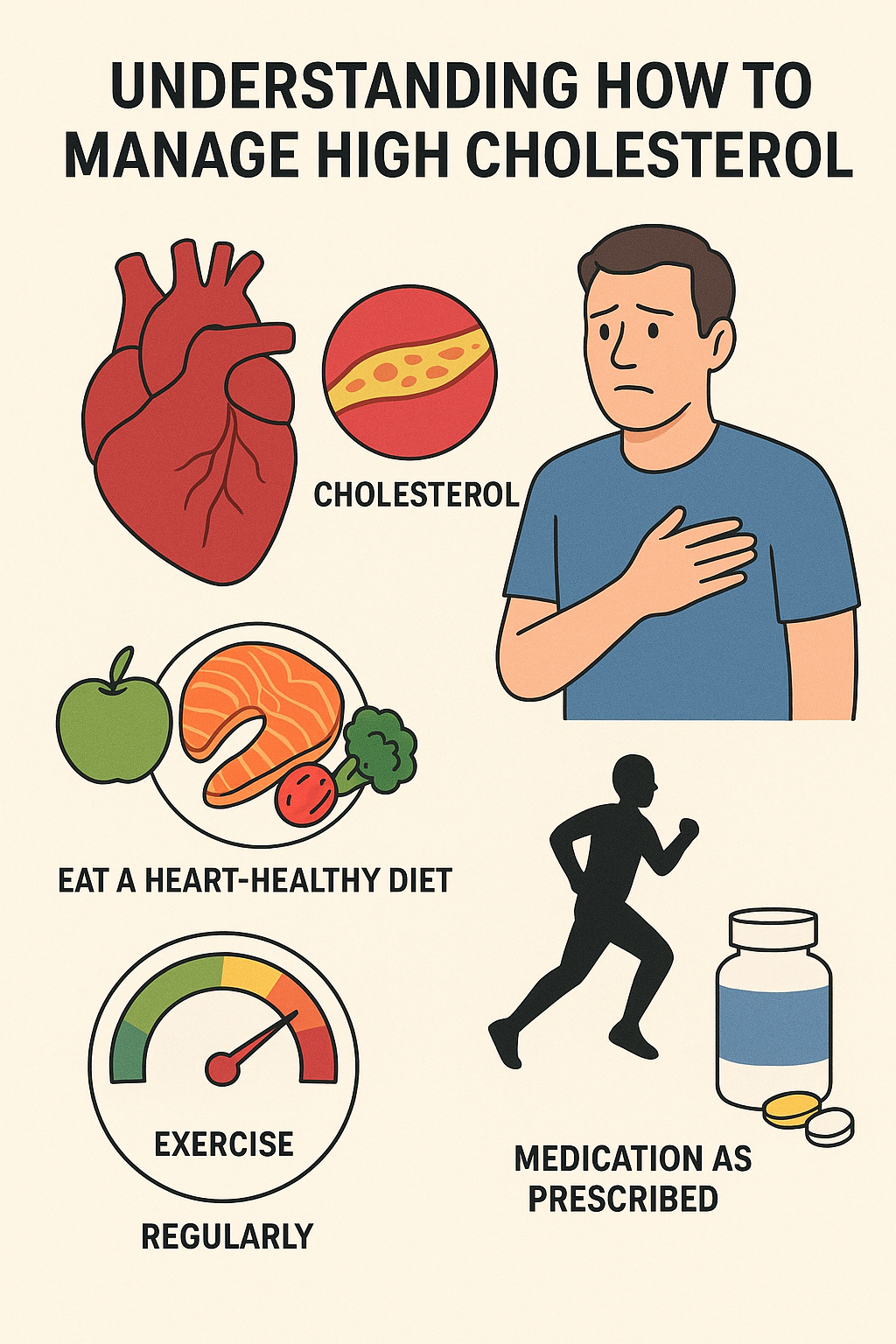
The Four Pillars of Cholesterol Management
1. Dietary Modifications
What you eat has a direct impact on your cholesterol levels. Making smart food choices is one of the most powerful tools for managing high cholesterol.
Foods to Embrace:
- Oats, barley, and whole grains rich in soluble fiber
- Fatty fish like salmon, mackerel, and sardines containing omega-3 fatty acids
- Nuts such as almonds, walnuts, and pistachios
- Legumes including beans, lentils, and chickpeas
- Fruits and vegetables, especially those high in pectin like apples, grapes, and citrus fruits
- Olive oil and avocados containing healthy monounsaturated fats
Foods to Limit or Avoid:
- Trans fats found in many processed and fried foods
- Saturated fats in red meat, full-fat dairy products, and tropical oils
- Processed meats like bacon, sausage, and deli meats
- Baked goods made with hydrogenated oils
- Foods high in dietary cholesterol, though these have less impact than once thought
2. Regular Physical Activity
Exercise is a cornerstone of cholesterol management. Physical activity helps raise HDL cholesterol while lowering LDL cholesterol and triglycerides. You don’t need to become a marathon runner to see benefits.
Recommended Activities:
- Aim for at least 150 minutes of moderate-intensity aerobic exercise per week
- Brisk walking, swimming, cycling, or dancing
- Strength training exercises at least twice a week
- Activities you enjoy and can sustain long-term
Even small increases in physical activity can make a difference. Taking the stairs instead of the elevator, parking farther away, or going for a walk during lunch breaks all contribute to your overall activity level.
3. Maintaining a Healthy Weight
Carrying excess weight, particularly around your midsection, contributes to high cholesterol. Losing even 5-10% of your body weight can significantly improve your cholesterol levels.
Weight management works hand-in-hand with dietary changes and exercise. Focus on sustainable lifestyle changes rather than quick-fix diets. Small, consistent changes in eating habits and activity levels lead to lasting results.
4. Medication When Necessary
For some people, lifestyle changes alone aren’t enough to bring cholesterol to healthy levels. This is where medication becomes an important part of the management strategy.
Common Cholesterol Medications:
Statins: The most commonly prescribed cholesterol-lowering drugs, statins work by blocking a substance your liver needs to make cholesterol. They can lower LDL cholesterol by 30-50% or more.
Bile Acid Sequestrants: These medications work by binding to bile acids, forcing your liver to use excess cholesterol to make more bile acids, thereby lowering blood cholesterol.
Cholesterol Absorption Inhibitors: These drugs help reduce the amount of cholesterol absorbed from food in your intestines.
PCSK9 Inhibitors: A newer class of injectable medications that can dramatically lower LDL cholesterol, particularly for people with genetic conditions or those who can’t tolerate statins.
Fibrates: Primarily used to lower triglycerides and can modestly increase HDL cholesterol.
Working with the Best Doctor for Your Cholesterol Management
Finding the right healthcare provider is essential for effective cholesterol management. While your primary care physician can manage most cases of high cholesterol, some situations may benefit from seeing a specialist.
Cardiologists specialize in heart and blood vessel conditions and can provide expert guidance for complex cholesterol cases or when you’re at high risk for cardiovascular disease. Lipidologists are specialists who focus specifically on cholesterol and lipid disorders, particularly useful for familial hypercholesterolemia or difficult-to-treat cases.
What to Look for in a Doctor:
- Someone who takes time to explain your condition and treatment options
- A provider who considers your individual risk factors and lifestyle
- Willingness to work with you on lifestyle modifications before jumping to medication
- Experience managing patients with similar conditions
- Good communication skills and accessibility
- A collaborative approach that respects your preferences and concerns
Monitoring Your Progress
Regular monitoring is crucial for successful cholesterol management. Your doctor will typically recommend:
- Initial cholesterol testing to establish baseline levels
- Follow-up testing 6-8 weeks after starting treatment or making lifestyle changes
- Ongoing monitoring every 3-6 months once cholesterol is controlled
- Annual comprehensive lipid panels as part of routine health maintenance
Understanding Your Cholesterol Numbers
Knowing what your cholesterol numbers mean helps you understand your risk and track your progress:
- Total Cholesterol: Desirable is less than 200 mg/dL
- LDL Cholesterol: Optimal is less than 100 mg/dL (lower targets for high-risk individuals)
- HDL Cholesterol: 60 mg/dL or higher is protective against heart disease
- Triglycerides: Normal is less than 150 mg/dL
Your doctor will interpret these numbers in the context of your overall cardiovascular risk, which includes factors like age, blood pressure, diabetes status, smoking history, and family history.
The Importance of Consistency
Managing high cholesterol is a lifelong commitment. The key to success is consistency in your approach:
- Take medications exactly as prescribed
- Maintain healthy eating habits even when you’re traveling or during holidays
- Stay active regardless of the season or your schedule
- Keep regular appointments with your healthcare provider
- Don’t stop treatment without consulting your doctor, even if you feel fine
Conclusion
Managing high cholesterol requires a comprehensive approach that combines lifestyle modifications with medical care when necessary. By focusing on the four pillars of management—diet, exercise, weight control, and medication when needed—and working closely with a knowledgeable healthcare provider, you can significantly reduce your risk of heart disease and stroke.
Remember, you’re not alone in this journey. Millions of people successfully manage their cholesterol every day, and with the right support and commitment, you can too. Take that first step today: schedule a checkup, make one healthy dietary change, or take a 15-minute walk. Your heart will thank you for it.
The best doctor for your cholesterol management is one who partners with you, respects your goals, and provides personalized care based on your unique situation. Don’t hesitate to seek expert guidance—your cardiovascular health is worth the investment.
Understanding the Different Types of Cholesterol
When doctors talk about cholesterol, they’re usually referring to several different measurements:
Low-Density Lipoprotein (LDL) is often called “bad” cholesterol because it contributes to the buildup of plaque in your arteries. High levels of LDL cholesterol increase your risk of heart attack and stroke.
High-Density Lipoprotein (HDL) is known as “good” cholesterol because it actually helps remove other forms of cholesterol from your bloodstream. HDL carries cholesterol back to your liver, where it can be broken down and removed from your body. Higher levels of HDL cholesterol are associated with a lower risk of heart disease.
Triglycerides are another type of fat found in your blood. When you eat, your body converts calories it doesn’t need into triglycerides, which are stored in fat cells. High triglyceride levels combined with low HDL or high LDL cholesterol can increase your risk of heart disease.
Total Cholesterol is the overall amount of cholesterol in your blood, including LDL, HDL, and a portion of your triglycerides.
What Causes High Cholesterol?
Several factors can contribute to high cholesterol levels, some of which you can control and others you cannot.
Diet plays a significant role. Foods high in saturated fats, trans fats, and dietary cholesterol can raise your blood cholesterol levels. These include fatty cuts of meat, full-fat dairy products, fried foods, and processed baked goods.
Weight is another important factor. Being overweight or obese tends to increase your LDL cholesterol and triglycerides while lowering your HDL cholesterol.
Physical inactivity contributes to weight gain and can negatively impact your cholesterol levels. Regular exercise helps boost HDL cholesterol while lowering LDL cholesterol and triglycerides.
Age and gender matter too. As you get older, your cholesterol levels tend to rise. Before menopause, women typically have lower total cholesterol levels than men of the same age. After menopause, however, women’s LDL cholesterol levels often increase.
Genetics can predispose some people to high cholesterol. Familial hypercholesterolemia is an inherited condition that causes very high LDL cholesterol levels and can lead to early heart disease.
Medical conditions such as diabetes, hypothyroidism, and kidney or liver disease can also affect your cholesterol levels.
Lifestyle Changes for Managing Cholesterol
The foundation of cholesterol management involves making healthy lifestyle changes. For many people, these modifications can significantly improve cholesterol levels without medication.
Dietary Modifications
Transforming your diet is one of the most powerful tools for managing cholesterol. Start by reducing your intake of saturated fats, which are found primarily in red meat and full-fat dairy products. The American Heart Association recommends that saturated fats should make up no more than five to six percent of your daily calorie intake.
Eliminate trans fats from your diet completely. These artificial fats, often found in margarine, store-bought cookies, crackers, and cakes, raise your overall cholesterol levels. Many countries have banned or restricted trans fats, but it’s still important to check food labels.
Increase your intake of omega-3 fatty acids, which don’t affect LDL cholesterol but have other heart-healthy benefits. Fatty fish like salmon, mackerel, and sardines are excellent sources. If you’re not a fan of fish, consider walnuts, flaxseeds, or omega-3 supplements.
Soluble fiber is your friend when it comes to lowering cholesterol. This type of fiber reduces the absorption of cholesterol into your bloodstream. Excellent sources include oatmeal, kidney beans, Brussels sprouts, apples, and pears. Aim for at least five to ten grams of soluble fiber daily.
Add whey protein to your diet, which you can find in dairy products. Studies have shown that whey protein supplements can lower both LDL and total cholesterol.
Exercise and Physical Activity
Regular physical activity can help raise HDL cholesterol and lower LDL cholesterol and triglycerides. You don’t need to become a marathon runner; even moderate exercise can make a difference. Aim for at least 150 minutes of moderate-intensity aerobic activity or 75 minutes of vigorous aerobic activity each week.
Start small if you’re not currently active. Take a brisk 30-minute walk during your lunch break five days a week. Take the stairs instead of the elevator. Join a fitness class or sports team. The key is finding activities you enjoy so you’ll stick with them long-term.
Weight Management
Losing even a modest amount of weight can help improve your cholesterol levels. If you’re carrying extra pounds, losing five to ten percent of your body weight can make a significant difference. Focus on sustainable changes rather than crash diets. Small modifications like drinking water instead of sugary beverages, snacking on air-popped popcorn instead of chips, or using smaller plates can add up over time.
Quit Smoking
If you smoke, quitting is one of the best things you can do for your cholesterol and overall health. Within just 20 minutes of quitting, your blood pressure and heart rate recover from the cigarette-induced spike. Within three months, your blood circulation and lung function begin to improve. Within a year, your risk of heart disease is half that of a smoker. Plus, quitting smoking can quickly improve your HDL cholesterol levels.
Limit Alcohol Consumption
Moderate alcohol consumption has been linked to higher HDL cholesterol levels, but the benefits aren’t strong enough to recommend drinking if you don’t already. If you do drink, do so in moderation—up to one drink per day for women and up to two drinks per day for men. Drinking too much alcohol can lead to serious health problems, including high blood pressure, heart failure, and stroke.
Medical Treatments for High Cholesterol
When lifestyle changes alone aren’t enough to bring your cholesterol to healthy levels, your doctor may recommend medication. The most commonly prescribed cholesterol-lowering drugs are statins, which block a substance your liver needs to make cholesterol. Statins can also help your body reabsorb cholesterol that has built up in plaques on your artery walls.
Other medications include bile acid sequestrants, which bind to bile acids and prevent cholesterol absorption; cholesterol absorption inhibitors, which limit the absorption of dietary cholesterol; PCSK9 inhibitors, which are injectable medications that help the liver absorb more LDL cholesterol; and fibrates and niacin, which primarily target triglycerides.
It’s important to take medications as prescribed and to continue healthy lifestyle habits even when taking cholesterol-lowering drugs. Medication and lifestyle changes work together most effectively.
Monitoring Your Progress
Regular cholesterol testing is essential for monitoring your levels and assessing your risk of cardiovascular disease. Adults should have their cholesterol checked every four to six years starting at age 20. If you have a family history of high cholesterol or other risk factors, your doctor may recommend more frequent testing.
A lipid panel measures your total cholesterol, LDL cholesterol, HDL cholesterol, and triglycerides. Understanding your numbers helps you and your doctor determine the best course of action.
Generally, total cholesterol should be less than 200 mg/dL, LDL cholesterol should be less than 100 mg/dL (or less than 70 mg/dL for people at very high risk), HDL cholesterol should be 60 mg/dL or higher, and triglycerides should be less than 150 mg/dL. However, your optimal numbers may vary based on your individual risk factors.

Living Well with High Cholesterol
Managing high cholesterol is a lifelong commitment, but it doesn’t have to feel like a burden. Think of it as an opportunity to improve your overall health and reduce your risk of serious diseases. Small, consistent changes can make a big difference over time.
Stay informed about your condition and work closely with your healthcare team. Don’t hesitate to ask questions or express concerns. Keep track of your cholesterol numbers and celebrate improvements, no matter how small.
Remember that managing cholesterol isn’t just about avoiding foods or taking pills—it’s about embracing a heart-healthy lifestyle that includes nutritious eating, regular physical activity, stress management, and maintaining a healthy weight. These changes will benefit not just your cholesterol levels but your entire body and mind.
With dedication and the right approach, you can successfully manage your cholesterol and enjoy a long, healthy life. Take it one day at a time, be patient with yourself, and don’t hesitate to seek support from friends, family, or support groups. Your heart will thank you for it.