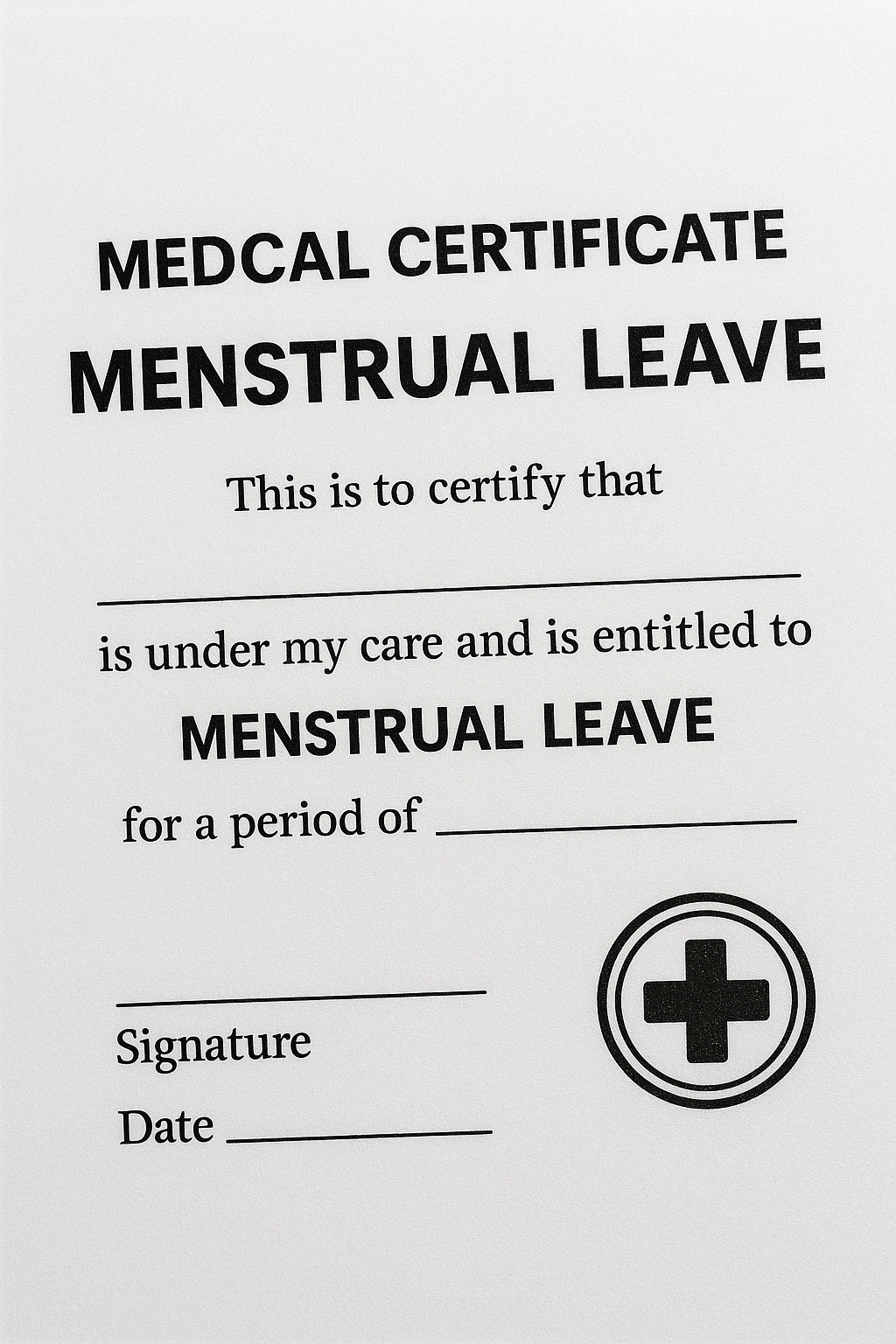
Medical Certificate for Menstrual Leave
Medical Certificate
Medical Certificate
Menstrual health has long been a taboo subject in workplace discussions, yet millions of individuals experience debilitating symptoms each month that significantly impact their ability to work. As conversations around menstrual equity gain momentum globally, the concept of menstrual leave and the medical certificates that support it have become increasingly relevant. This comprehensive guide explores everything you need to know about obtaining and using medical certificates for menstrual leave.

Understanding Menstrual Leave
Menstrual leave, also known as period leave, refers to a workplace policy that allows employees who menstruate to take time off during their menstrual cycle, particularly when experiencing severe symptoms that interfere with work performance. Unlike sick leave, which is typically used for acute illnesses, menstrual leave acknowledges the recurring nature of menstrual symptoms and the need for specific accommodations.
The concept is not entirely new. Countries like Japan have had menstrual leave policies since 1947, while more recently, nations including South Korea, Taiwan, Indonesia, and Zambia have implemented similar provisions. In 2023, Spain became the first European country to introduce paid menstrual leave at a national level, signaling a shift in how societies view menstrual health in the workplace.
When Is a Medical Certificate Necessary?
The requirement for a medical certificate for menstrual leave varies significantly depending on your location, company policy, and the duration of leave requested. Generally, a medical certificate becomes necessary in the following situations:
Severe Menstrual Symptoms
When menstrual symptoms are so severe that they prevent you from performing your job duties, a medical certificate can provide the documentation needed to justify your absence. Conditions that commonly warrant medical certification include dysmenorrhea (painful periods), menorrhagia (heavy bleeding), endometriosis, polycystic ovary syndrome, and premenstrual dysphoric disorder.
Extended Leave Requests
Many employers require medical documentation when an employee requests multiple consecutive days off or frequent absences related to menstruation. A medical certificate establishes a pattern of legitimate medical need rather than sporadic absences.
Formal Accommodation Requests
If you’re seeking formal workplace accommodations under disability or equal employment laws, a comprehensive medical certificate detailing your condition and its impact on work capacity is typically required. This documentation creates an official record and helps your employer understand the nature and extent of accommodations needed.
Important Note
Even in workplaces without specific menstrual leave policies, you may still be entitled to accommodations under broader health and disability legislation. A medical certificate strengthens your case and provides legal protection for both you and your employer.
What Should a Medical Certificate Include?
A comprehensive medical certificate for menstrual leave should contain specific information to be considered valid and useful. While the exact requirements may vary by jurisdiction and employer, most certificates should include the following elements:
Healthcare Provider Information
The certificate must include the full name, credentials, license number, contact information, and signature of the issuing healthcare provider. This establishes the legitimacy of the document and allows for verification if necessary.
Patient Identification
Your full name and date of birth should be clearly stated to prevent any confusion about the certificate’s recipient.
Date of Examination
The certificate should specify when the medical evaluation took place, as this helps establish the timeliness and relevance of the assessment.
Medical Condition
While respecting privacy, the certificate should provide enough detail about your condition to justify the leave request. This might include a diagnosis such as severe dysmenorrhea, endometriosis, or premenstrual dysphoric disorder, along with a brief description of symptoms.
Impact on Work Capacity
The healthcare provider should explain how the condition affects your ability to perform job duties. This might include statements about pain levels, concentration difficulties, mobility limitations, or other functional impairments during menstruation.
Recommended Accommodations
The certificate should clearly state the recommended accommodation, whether that’s regular menstrual leave, flexible working arrangements, or other modifications. Specific recommendations might include one to two days of leave per menstrual cycle, work-from-home options during symptomatic days, or flexible start times.
Duration and Frequency
If the condition is chronic, the certificate should specify how long the accommodation will be needed and how frequently leave may be required. This helps employers plan accordingly and prevents the need for repeated documentation.
Privacy Considerations
Healthcare providers should balance the need for adequate documentation with patient privacy rights. You have the right to discuss with your doctor what information is included, and in many jurisdictions, employers are not entitled to detailed medical information beyond what’s necessary to process the leave request.
How to Obtain a Medical Certificate
Securing a medical certificate for menstrual leave involves several steps, and being prepared can make the process smoother and more efficient.
Document Your Symptoms
Before your medical appointment, keep a detailed menstrual diary for at least two to three cycles. Record the dates of your period, severity of symptoms (using a pain scale of one to ten), specific symptoms experienced, medications taken and their effectiveness, and impact on daily activities and work. This documentation provides concrete evidence of your condition and helps your healthcare provider make an accurate assessment.
Schedule an Appointment
Make an appointment with your primary care physician, gynecologist, or other qualified healthcare provider. When scheduling, clearly state that you need to discuss menstrual symptoms and obtain documentation for workplace accommodations. This ensures the provider allocates sufficient time for a thorough consultation.
Prepare for Your Appointment
Bring your symptom diary, a list of current medications and supplements, information about your employer’s leave policies or accommodation requirements, and any questions you want to ask. Being well-prepared demonstrates the seriousness of your request and helps the provider give you the most appropriate documentation.
Be Honest and Specific
During your appointment, be candid about your symptoms, their severity, and how they affect your work. Don’t minimize your experience out of embarrassment or concern about being taken seriously. Specific examples of how symptoms impact your job performance are particularly helpful.
Discuss Workplace Requirements
Explain to your healthcare provider what your employer requires in terms of documentation. This ensures the certificate includes all necessary information and is formatted appropriately.
Request Additional Support
If your condition requires ongoing accommodation, ask if your provider can provide a long-term certificate rather than requiring monthly renewals. This reduces administrative burden for everyone involved.
Legal Frameworks and Your Rights
The legal landscape surrounding menstrual leave varies dramatically across different countries and regions. Understanding your rights is crucial for advocating effectively for yourself in the workplace.
Countries with Menstrual Leave Legislation
Several countries have implemented national menstrual leave policies. In Japan, the system has existed since post-World War II, though utilization rates remain low due to social stigma. South Korea offers one day of unpaid menstrual leave per month. Taiwan provides three days of menstrual leave annually, with the first day paid. Indonesia grants two days of menstrual leave per month. Spain introduced paid menstrual leave for severe symptoms in 2023, requiring a medical certificate. Zambia offers one day of paid menstrual leave per month, a policy in place since the 1990s.
Regions Without Specific Legislation
In countries without specific menstrual leave laws, such as the United States, United Kingdom, Canada, and Australia, employees may still be entitled to accommodations under broader disability, health, or equal employment legislation. In the United States, severe menstrual conditions may qualify for accommodations under the Americans with Disabilities Act or the Family and Medical Leave Act. In the United Kingdom, menstrual conditions can be addressed through sick leave policies or potentially under the Equality Act 2010. Canada’s provincial human rights codes and employment standards may provide protection. In Australia, fair work legislation and anti-discrimination laws may apply.
Company Policies
Even without national legislation, many progressive companies have implemented their own menstrual leave policies. Organizations like Zomato in India, Coexist in the UK, and various tech companies have led the way in offering menstrual leave as part of their benefits packages.
Challenges and Controversies
While menstrual leave policies aim to support employee wellbeing, they are not without controversy and practical challenges that must be acknowledged and addressed.
Stigma and Utilization
One of the biggest obstacles to effective menstrual leave policies is persistent stigma. Many employees feel uncomfortable discussing menstruation with supervisors or fear being perceived as weak or less committed to their jobs. This stigma often results in low utilization rates even where policies exist, as seen in Japan where very few eligible employees actually take menstrual leave.
Privacy Concerns
Requiring medical certificates can feel invasive to some employees, forcing them to disclose intimate health information. There’s also concern about how this information is stored and who has access to it within an organization.
Gender and Inclusivity
Menstrual leave policies must be carefully worded to include all individuals who menstruate, including transgender men and non-binary people, while not reinforcing stereotypes that menstruation makes people less capable workers. The framing of such policies is crucial to avoid unintended discriminatory effects.
Workplace Fairness
Some critics argue that menstrual leave creates an unfair advantage or could lead to discrimination in hiring practices. Employers might be hesitant to hire people who menstruate if they anticipate regular monthly absences. However, proponents counter that menstrual leave actually promotes fairness by acknowledging biological differences and providing equitable access to workplace participation.
Verification and Abuse
There are concerns about potential abuse of menstrual leave policies and the challenges of verification. However, research from countries with established policies suggests that abuse is rare, and the benefits of supporting employees with legitimate needs far outweigh concerns about misuse.
Best Practices for Employees
If you’re navigating menstrual leave in your workplace, whether with or without a formal policy, these best practices can help you advocate effectively for your needs while maintaining professionalism.
Know Your Rights
Research the laws and regulations in your jurisdiction as well as your company’s specific policies regarding health-related leave, disability accommodations, and anti-discrimination protections.
Build Your Case
Maintain thorough documentation of your symptoms, medical treatments sought, and impact on work performance. This creates a clear record that supports your accommodation requests.
Communicate Proactively
When possible, have conversations about your needs before they become urgent. Proactive communication helps your employer plan and demonstrates your commitment to minimizing disruption.
Frame It Professionally
When discussing menstrual leave, focus on your ability to perform your job effectively rather than dwelling on symptoms. For example, you might say: “To maintain my productivity and quality of work, I occasionally need to work from home during my menstrual cycle when symptoms are severe.”
Propose Solutions
Rather than simply requesting leave, consider offering alternative arrangements such as working from home, flexible hours, or making up time during other days of the month. This shows initiative and consideration for business needs.
Seek Support
Connect with human resources, employee resource groups, or occupational health services. These resources can provide guidance and support in navigating accommodation requests.
Best Practices for Employers
Organizations that want to support employees experiencing debilitating menstrual symptoms should consider implementing comprehensive policies and practices.
Develop Clear Policies
Create transparent, written policies regarding menstrual leave or health-related accommodations. Clearly outline eligibility, documentation requirements, approval processes, and employee rights and responsibilities.
Train Management
Educate supervisors and HR personnel about menstrual health, relevant policies, and how to handle accommodation requests sensitively and professionally. Training should emphasize confidentiality and respect.
Ensure Privacy
Establish strict protocols for handling medical information, limit access to documentation to only essential personnel, and store medical certificates separately from regular personnel files with appropriate security measures.
Create a Supportive Culture
Work to reduce stigma around menstrual health through education, wellness programs, and leadership modeling. When senior leaders speak openly about the importance of health accommodations, it normalizes these conversations throughout the organization.
Offer Flexibility
Consider multiple accommodation options beyond simple leave, including remote work opportunities, flexible scheduling, ergonomic accommodations, and access to wellness spaces.
Monitor and Adjust
Regularly review the effectiveness of your policies, gather employee feedback, track utilization rates, and adjust based on outcomes. Continuous improvement ensures your policies actually serve their intended purpose.

Conclusion
Medical certificates for menstrual leave represent an important tool in the broader movement toward menstrual equity and workplace inclusion. While the concept may still be evolving in many regions, the fundamental principle is clear: employees experiencing debilitating menstrual symptoms deserve recognition, accommodation, and support.
Whether you’re an employee seeking to understand your options or an employer working to create supportive policies, the key lies in open communication, thorough documentation, and a commitment to treating menstrual health with the same seriousness as any other medical concern. As more workplaces embrace these principles, we move closer to environments where all employees can thrive regardless of their biological realities.
The path forward requires continued education, policy innovation, and cultural change. By treating menstrual leave not as a special privilege but as a reasonable accommodation for a common medical reality, we create more equitable, productive, and humane workplaces for everyone. As conversations around menstrual health continue to evolve from taboo to mainstream, medical certificates will play a crucial role in bridging the gap between individual needs and workplace requirements, ensuring that no one has to choose between their health and their career.