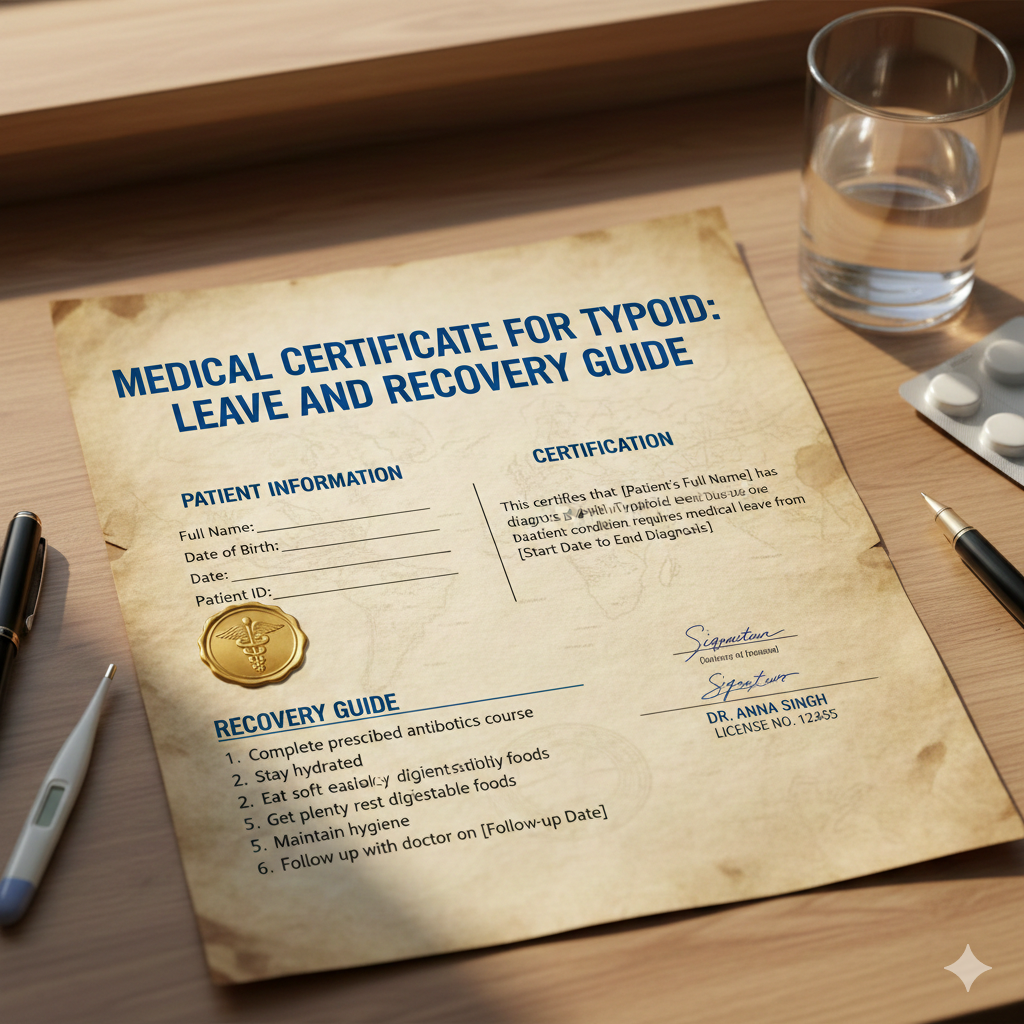
Medical Certificate for Typhoid: Leave and Recovery Guide
Medical Certificate
Diagnosed with Typhoid? Learn how long you need to rest and how to get a valid medical certificate for work or school leave online.
Medical Certificate for Typhoid: Your Guide to Recovery Leave
A typhoid diagnosis can be overwhelming, especially when you’re trying to navigate work or school obligations while managing a serious infection. Understanding your rights to medical leave and securing proper documentation is crucial for a smooth recovery period. This comprehensive guide will walk you through everything you need to know about obtaining a medical certificate for typhoid, understanding recovery timeframes, and ensuring you have adequate time off to heal completely.
Typhoid fever, caused by the bacterium Salmonella typhi, is a potentially life-threatening illness that requires proper medical treatment and adequate rest. Whether you’ve been diagnosed through blood tests, stool cultures, or the Widal test, your healthcare provider will likely recommend extended time off from work or school. A properly documented medical certificate is your key to securing this necessary leave without jeopardizing your employment or academic standing.
The good news is that with modern telemedicine services, obtaining a legitimate medical certificate for typhoid has become more accessible than ever. You no longer need to visit a clinic in person while battling high fever and fatigue. This guide will explain how online medical services verify your condition, what documentation you’ll need, and how to ensure your sick leave request is approved without complications.
Understanding Typhoid Recovery Times
Recovery from typhoid fever is not a quick process. Unlike a common cold or flu, typhoid requires significant time for your body to eliminate the infection and regain strength. The typical recovery period varies based on several factors, including the severity of your infection, how quickly treatment began, your overall health status, and whether you develop any complications.
Most healthcare providers recommend a minimum of two weeks off work or school for uncomplicated typhoid cases. During the first week of treatment, you’ll likely experience high fever, severe headaches, weakness, and digestive symptoms. The antibiotics prescribed will begin working within a few days, but complete recovery takes considerably longer. Your body needs this time to fight off the bacteria, repair any damage to your digestive system, and rebuild your strength.
It’s crucial to understand that feeling better doesn’t mean you’re fully recovered or no longer contagious. Many patients make the mistake of returning to work too early, which can lead to relapse, prolonged recovery, or spreading the infection to others. Medical certificates for typhoid typically cover at least 14 days, and your doctor may extend this period based on follow-up assessments and test results.
Why 2 Weeks is the Standard Leave
The two-week standard for typhoid leave isn’t arbitrary – it’s based on the bacterial lifecycle and the typical course of antibiotic treatment. Typhoid bacteria can persist in your system even after symptoms improve, and you may remain contagious for days or weeks after feeling better. The standard 14-day leave period ensures you complete your full course of antibiotics (usually 10-14 days) and allows time for the medication to fully eliminate the bacteria from your bloodstream and digestive tract.
During the first week, you’ll typically be quite ill with high fever reaching 103-104°F (39-40°C), severe fatigue, body aches, and potentially rose-colored spots on your chest. Your appetite will likely be poor, and you may experience constipation or diarrhea. This is when you’re most contagious and absolutely should not be around others, especially in food service, healthcare, childcare, or educational settings.
By the second week, if treatment is effective, your fever should begin to break and symptoms should gradually improve. However, you may still feel weak, tired, and experience digestive issues. This week is critical for complete recovery – rushing back to work can trigger a relapse or complications. Your immune system is still working hard to eliminate the infection, and physical or mental stress can interfere with this process.
Medical professionals also recommend the two-week period to allow for proper hygiene practices and to prevent transmission to family members, coworkers, or classmates. You’ll need to practice strict handwashing, use separate bathroom facilities when possible, and avoid handling food for others. These precautions are most critical during the infectious period, which typically lasts through the first 7-10 days of treatment but can extend longer in some cases.
Relapses and Complications
One of the most important reasons for adequate rest during typhoid recovery is the risk of relapse. Studies show that approximately 10-20% of typhoid patients experience a relapse within 2-3 weeks after their initial recovery, especially if they return to normal activities too quickly. A relapse can be just as severe as the initial infection and may require a second course of antibiotics and extended leave.
Complications from typhoid can be serious and may require hospitalization. These include intestinal bleeding or perforation (occurring in about 1-3% of cases), which typically happens in the third week of illness if untreated or undertreated. Other complications include typhoid hepatitis, inflammation of the gallbladder, kidney problems, or in rare cases, neurological complications such as delirium, psychosis, or meningitis.
If you develop any complications, your medical certificate will need to be extended well beyond the standard two weeks. Intestinal perforation requires surgery and can add 4-6 weeks to your recovery time. Severe cases requiring hospitalization may need a month or more of total rest and recuperation. This is why it’s essential to work with a licensed physician who can properly assess your condition and adjust your medical documentation as needed.
Warning signs that may indicate complications include severe abdominal pain, especially if sudden and sharp, bleeding in your stool, confusion or altered mental state, or high fever that doesn’t improve after 3-4 days of antibiotics. If you experience any of these symptoms, seek immediate medical attention. Your doctor will need to update your medical certificate to reflect the extended recovery period required for complicated typhoid cases.
Getting Your Typhoid Sick Note Online
Modern telemedicine has revolutionized how patients obtain medical certificates, making it possible to secure legitimate documentation without the need for in-person clinic visits. This is particularly beneficial for typhoid patients who are experiencing high fever, severe fatigue, and should avoid public spaces to prevent transmission. Online medical services connect you with licensed physicians who can review your medical reports, conduct virtual consultations, and issue legally valid medical certificates.
To obtain a medical certificate for typhoid online, you’ll need to prepare your diagnostic test results and complete a virtual consultation with a licensed physician. The process typically involves uploading your laboratory reports, providing information about your symptoms and treatment, and scheduling a video or phone consultation. The doctor will verify your diagnosis, assess your condition, and determine the appropriate length of medical leave based on clinical guidelines and your individual circumstances.
Online medical certificates carry the same legal validity as those issued during in-person consultations, provided they come from licensed healthcare providers. The certificate will include your name, diagnosis (typhoid fever), the date of consultation, the recommended duration of leave, and the physician’s signature and medical registration number. Many employers and schools now readily accept digital medical certificates, though you should verify your organization’s specific requirements.
The convenience of online medical certificates doesn’t mean cutting corners on medical care. Legitimate telemedicine platforms will still require proper diagnostic documentation and will conduct thorough consultations to ensure the certificate accurately reflects your medical condition. This protects both you and the physician, ensuring your leave is properly justified and that you receive appropriate medical guidance for your recovery.
Essential Medical Reports Needed (Widal Test)
When requesting an online medical certificate for typhoid, you’ll need to provide laboratory evidence of your diagnosis. The most commonly accepted tests include the Widal test, blood culture, stool culture, or PCR tests for Salmonella typhi. The Widal test, despite some limitations, remains widely used for typhoid diagnosis, especially in regions where typhoid is endemic. It detects antibodies against the O and H antigens of the typhoid bacteria.
A positive Widal test typically shows elevated titers of O antigen (≥1:160) or H antigen (≥1:160), though interpretation can vary based on local endemic patterns. However, the Widal test alone is not always conclusive, as it can show false positives due to previous vaccination or exposure to similar bacteria, and false negatives in early infection. This is why doctors may request additional supporting documentation, such as a complete blood count showing low white blood cell count (leukopenia), which is characteristic of typhoid.
Blood culture is considered the gold standard for typhoid diagnosis, with the highest accuracy when performed during the first week of fever. If you have blood culture results showing Salmonella typhi growth, this provides definitive proof of infection and will be readily accepted by online physicians issuing medical certificates. Stool cultures may also be positive, particularly in the second or third week of illness, and can be used to support your diagnosis.
When preparing to request your online medical certificate, gather all available test results including Widal test reports, blood culture results, complete blood count, and any other relevant laboratory work. Also document your symptoms, including when fever started, its pattern, and any other symptoms you’ve experienced. This comprehensive information allows the online physician to make an informed assessment and provide a medical certificate that accurately reflects the severity of your condition and the necessary recovery period.
How Our Doctors Verify Your Condition
Online medical platforms employ rigorous verification processes to ensure medical certificates are issued appropriately and legally. When you submit a request for a typhoid medical certificate, licensed physicians review your laboratory reports for authenticity and consistency. They check that test results are from recognized laboratories, dated appropriately, and show values consistent with typhoid fever. Any discrepancies or questionable results will prompt the physician to request additional documentation or clarification.
During the virtual consultation, doctors conduct a thorough medical history and symptom assessment. They’ll ask detailed questions about your fever pattern, gastrointestinal symptoms, appetite changes, and overall condition. This conversation helps verify that your reported symptoms align with your laboratory findings and the clinical presentation of typhoid fever. Experienced physicians can quickly identify inconsistencies that might suggest misdiagnosis or fraudulent certificate requests.
Doctors also verify your treatment plan and ensure it aligns with current medical guidelines for typhoid management. They’ll confirm that you’re taking appropriate antibiotics (such as ciprofloxacin, azithromycin, or ceftriaxone) and receiving proper supportive care. This verification process protects both the patient and the healthcare system, ensuring that medical leave is granted for genuine medical reasons and that patients receive correct treatment guidance.
The medical certificate issued after verification includes specific details that make it legally valid and difficult to forge. It contains the physician’s full name, medical registration number, digital signature, and sometimes a unique certificate number for verification. The certificate clearly states your diagnosis, the date of consultation, and the recommended leave period based on clinical guidelines. This documentation provides your employer or school with confidence that your leave request is medically justified and properly documented.
FAQs on Typhoid Leave
How long is typical medical leave for typhoid?
The standard medical leave for uncomplicated typhoid is 14 days (two weeks), though this can extend to 3-4 weeks for complicated cases or if you experience a relapse. Your doctor will determine the appropriate duration based on your symptoms, test results, and response to treatment. Some employers may require you to provide updated medical certificates if you need to extend your leave beyond the initial period granted.
Can I get a medical certificate if I only have Widal test results?
Yes, many physicians will issue medical certificates based on positive Widal test results combined with compatible clinical symptoms. However, because the Widal test can have false positives and negatives, your doctor may request additional supporting evidence such as a complete blood count or may recommend confirming the diagnosis with blood culture. The stronger your diagnostic evidence, the more straightforward the certificate issuance process will be.
Will my employer accept an online medical certificate?
Most employers accept online medical certificates from licensed physicians, especially since telemedicine became widely recognized during recent years. The certificate should include all standard elements: physician details, medical registration number, diagnosis, consultation date, and recommended leave period. Check your company’s sick leave policy or HR department to confirm their specific requirements for medical documentation.
When can I return to work after typhoid?
You can typically return to work after completing your full course of antibiotics (usually 10-14 days), being fever-free for at least 48 hours without medication, and feeling strong enough to perform your job duties. However, if you work in food service, healthcare, or childcare, you may need additional stool tests to confirm you’re no longer carrying the bacteria. Some employers in these sensitive fields require two or three consecutive negative stool cultures before allowing return to work.
What if I need to extend my medical leave?
If your recovery is taking longer than expected or you develop complications, contact your doctor for a follow-up consultation. They can assess your current condition and issue an extended medical certificate if clinically justified. Be proactive about this – notify your employer before your initial leave period expires, and provide the updated certificate as soon as possible. Extended leave may require additional medical documentation or approval from your employer’s occupational health department.
Do I need to inform my employer about my typhoid diagnosis?
While you’re generally required to provide a medical certificate for sick leave, the level of detail you share about your specific diagnosis may vary by jurisdiction and company policy. In most cases, a medical certificate stating you have a bacterial infection requiring treatment and rest is sufficient. However, if you work in food service, healthcare, or other high-risk environments, you may be legally required to disclose a typhoid diagnosis to protect public health.
Is online consultation safe for typhoid diagnosis and certification?
Online consultation is appropriate for issuing medical certificates when you already have confirmed laboratory diagnosis and are receiving treatment. The virtual consultation allows the physician to review your test results, assess your symptoms, and provide appropriate medical guidance while you rest at home. However, if you’re experiencing severe symptoms, signs of complications, or haven’t yet been diagnosed, you should seek in-person emergency medical care rather than relying solely on telemedicine.

Taking Typhoid Recovery Seriously
Typhoid fever is a serious infection that requires adequate time for complete recovery. Don’t rush back to work or school before you’re fully healed – doing so risks relapse, complications, and spreading the infection to others. A proper medical certificate ensures you have the documented leave you need while protecting your employment or academic standing.
Modern online medical services make it easier than ever to obtain legitimate medical certificates without the stress of in-person clinic visits while you’re ill. By providing proper diagnostic documentation and working with licensed physicians, you can secure the medical leave you need to focus on what matters most: your health and recovery.
Remember that typhoid recovery isn’t just about taking antibiotics – it’s about giving your body the rest and time it needs to fully eliminate the infection and regain strength. Follow your doctor’s instructions carefully, complete your full course of medication, maintain strict hygiene practices, and don’t hesitate to seek follow-up care if your symptoms persist or worsen. With proper treatment and adequate rest, most typhoid patients make a complete recovery and can return to their normal activities within 2-4 weeks.