The ABCs of Getting a Medical Certificate: What You Need to Know
Medical Certificate
Medical certificates are essential documents that verify your health status for various purposes, from taking sick leave at work to participating in sports activities. Whether you’re an employee, student, athlete, or someone applying for insurance, understanding how to obtain and use a medical certificate properly can save you time, money, and potential headaches. This comprehensive guide will walk you through everything you need to know about medical certificates.
What Is a Medical Certificate?
A medical certificate, also known as a doctor’s note or medical excuse, is an official document issued by a licensed healthcare professional that confirms a patient’s medical condition, treatment, or fitness for specific activities. These certificates serve as formal proof of illness, injury, recovery, or medical fitness and are legally recognized documents in most jurisdictions.
Medical certificates can serve multiple purposes, including documenting sick leave, confirming fitness to work, verifying vaccination status, certifying disability, or approving participation in sports or other physical activities.
Types of Medical Certificates
Understanding the different types of medical certificates helps ensure you request the appropriate documentation for your specific situation.
Sick Leave Certificates are issued when you’re unable to work due to illness or injury. These typically specify the dates you’re unfit for work and may include recommendations for modified duties upon return.
Fitness to Work Certificates confirm that you’re medically fit to perform specific job duties, often required after extended sick leave or for certain occupations with health and safety requirements.
Pre-Employment Medical Certificates are required by some employers to verify that new hires are physically capable of performing job-specific tasks, especially in physically demanding roles.
Sports Participation Certificates verify that individuals are healthy enough to engage in athletic activities, commonly required by schools, sports clubs, and competition organizers.
Travel Medical Certificates may be needed for certain destinations or if you’re traveling with medical conditions, medications, or equipment that require documentation.
Insurance Medical Certificates are used to support insurance claims or applications, providing evidence of medical conditions, treatments, or disabilities.
When Do You Need a Medical Certificate?
The circumstances requiring a medical certificate vary depending on your employer’s policies, school regulations, or specific institutional requirements. Many workplaces require a medical certificate for sick leave lasting more than two or three consecutive days, though some employers request them for any absence. Understanding your organization’s specific policy is crucial.
Schools and universities typically require medical certificates for extended absences affecting examinations or coursework. Athletes need fitness certificates before participating in competitive sports or joining sports programs. Additionally, certain job applications, especially for positions with physical requirements or those in healthcare, transportation, or public safety, may require pre-employment medical certificates.
If you’re claiming insurance benefits related to illness, injury, or disability, your insurance provider will almost certainly require medical documentation. Similarly, some visa applications and international travel situations necessitate proof of vaccination or medical fitness.
The Best 4 ABCs of Getting a Medical Certificate: What You Need to Know
Navigating the process of obtaining a medical certificate can seem daunting, whether you need one for work, school, travel, or legal purposes. Understanding the essential steps can make this process smoother and less stressful. Here are the four fundamental ABCs that will guide you through getting a medical certificate efficiently and correctly.
A: Assessment of Your Needs
Before rushing to a doctor’s office, take time to understand exactly what type of medical certificate you need. Not all medical certificates are created equal, and different situations require different levels of documentation.
Identify the Purpose
The first step is determining why you need the certificate. Are you requesting time off from work due to illness? Do you need documentation for a fitness assessment before starting a new job? Perhaps you’re applying for disability benefits, or maybe you need clearance for international travel. Each scenario may require specific information to be included in your certificate.
Work-related medical certificates typically need to state the dates you were unable to work and whether you’re fit to return. They usually don’t need to include detailed diagnoses unless specifically requested by your employer or required by law. Educational institutions often require similar documentation when students miss classes or exams due to health reasons.
Understand the Requirements
Different organizations have varying requirements for medical certificates. Some employers accept a simple note from any registered medical practitioner, while others may require documentation from a specialist or a certificate that follows a specific format. Insurance companies often have their own forms that must be completed by your physician.
For international travel, you may need specific health clearances, vaccination records, or certificates proving you’re free from certain contagious diseases. Sports organizations might require comprehensive physical examinations and detailed assessments of your fitness level. Legal proceedings may demand extensive medical documentation that meets court standards.
Contact the requesting organization beforehand to clarify exactly what they need. Ask about specific format requirements, whether they accept electronic submissions, how recent the certificate needs to be, and if there are any particular sections that must be completed. This preparation prevents wasted time and multiple doctor visits.
Consider Timing
Medical certificates are typically valid for limited periods. A certificate issued today might not be accepted if submitted weeks later, depending on its purpose. Plan your doctor’s appointment strategically, keeping in mind processing times and submission deadlines. Some situations require the certificate to be issued within a certain timeframe of the event or condition it’s documenting.
B: Booking the Right Appointment
Once you understand your needs, the next crucial step is arranging an appointment with the appropriate healthcare provider. This isn’t always as straightforward as seeing your regular family doctor.
Choose the Appropriate Provider
For basic medical certificates related to common illnesses or minor injuries, your general practitioner or family doctor is usually sufficient. These healthcare providers can issue certificates for sick leave, minor workplace injuries, and routine fitness assessments. They’re familiar with your medical history, which can expedite the process.
However, certain situations require specialists. If you’re seeking a certificate related to a specific condition like a heart problem, mental health issue, or chronic disease, you may need to see a cardiologist, psychiatrist, or relevant specialist. Occupational medicine physicians specialize in work-related health issues and certificates. Some certificates, particularly those for aviation, commercial driving, or hazardous work environments, must be issued by doctors with specific qualifications or certifications.
Schedule Appropriately
When booking your appointment, be transparent about why you’re coming. Inform the receptionist that you need a medical certificate and explain its purpose. This allows the practice to allocate sufficient time for your consultation and ensure the right doctor is available. Medical certificate appointments often take longer than standard consultations because they require thorough examinations and detailed documentation.
If you’re currently ill and need a certificate for work or school, try to see a doctor as soon as possible. Many clinics offer same-day appointments for acute illnesses. Some even provide telehealth consultations, though not all organizations accept certificates issued via virtual appointments, so verify this beforehand.
Prepare Your Information
Before your appointment, gather all relevant medical records, previous test results, and documentation related to your condition. If you’re requesting a certificate for a workplace injury, bring incident reports and any correspondence from your employer. For disability or insurance claims, collect all supporting documentation that strengthens your case.
Prepare a clear timeline of your symptoms or condition. Note when symptoms began, how they’ve progressed, what treatments you’ve tried, and how your condition affects your daily activities or work capacity. This information helps the doctor provide a more accurate and comprehensive certificate.
C: Consultation and Examination
The consultation itself is where the actual assessment takes place. This is your opportunity to clearly communicate your situation and undergo any necessary examinations that will support the medical certificate.
Be Honest and Thorough
Complete honesty with your healthcare provider is essential. Exaggerating symptoms or providing false information can lead to inappropriate medical certificates, which may have legal consequences and damage your credibility. Conversely, downplaying symptoms might result in a certificate that doesn’t adequately reflect your actual condition or needs.
Describe your symptoms in detail, including their severity, frequency, and impact on your daily functioning. If pain is involved, use descriptive terms and rate it on a scale if asked. Explain how your condition affects your ability to work, study, or perform specific activities. The more clearly you communicate, the more accurately the doctor can document your situation.
If you’re seeking a fitness certificate or clearance for an activity, be upfront about the physical demands involved. A doctor needs to know if you’ll be sitting at a desk, lifting heavy objects, working at heights, or operating machinery to provide an appropriate assessment.
Undergo Necessary Examinations
Depending on the type of certificate required, your doctor may need to perform various examinations or tests. For a sick leave certificate, this might be as simple as checking your temperature, examining your throat, or listening to your lungs. More comprehensive certificates require detailed physical examinations, blood tests, imaging studies, or specialist assessments.
Cooperate fully with all examinations and follow instructions carefully during physical tests. If you’re unable to perform certain movements or activities due to pain or limitation, communicate this clearly rather than pushing through discomfort. The doctor needs to observe your genuine capabilities and limitations.
Some certificates require documentation of specific findings. For example, a certificate stating you’re unfit for heavy lifting should be supported by examination findings or test results that justify this restriction. Insurance and legal certificates often need even more detailed medical evidence.
Discuss the Certificate Content
During or after the examination, discuss with your doctor what will be included in the certificate. Review the dates, restrictions, and recommendations they plan to document. If you need specific wording or information included to meet the requesting organization’s requirements, mention this politely and provide any forms or guidelines you received.
Be aware that doctors have professional and ethical obligations regarding what they can certify. They cannot issue certificates for conditions they haven’t personally assessed or for timeframes they haven’t directly observed. They also cannot make false statements or provide certificates that aren’t supported by clinical findings. Respect these boundaries and understand that your doctor’s professional integrity is paramount.
If your doctor suggests modifications to what you’re requesting—perhaps a shorter duration or less restrictive limitations—listen to their reasoning. They may have valid medical or ethical concerns that need to be addressed. Sometimes what you think you need differs from what’s medically appropriate.
D: Documentation and Delivery
The final step involves ensuring the medical certificate is properly completed, contains all necessary information, and reaches its destination correctly.
Review the Certificate Thoroughly
Before leaving the doctor’s office or accepting an electronic certificate, review it carefully. Check that all required information is included: your full name (spelled correctly), date of birth or identification number, dates of the examination and any relevant illness period, specific statements required by the requesting organization, the doctor’s full name and credentials, their registration number, practice address and contact information, official letterhead or stamp, and the date of issue with the doctor’s signature.
Verify that the certificate clearly states what it needs to state. If you need confirmation that you’re fit to work, ensure the certificate explicitly says this. If you require specified restrictions like “no heavy lifting” or “modified duties,” confirm these are documented. Ambiguous wording can lead to the certificate being rejected or questioned.
Check for any errors in dates, names, or other details. Mistakes can invalidate a certificate or cause delays while you obtain corrections. It’s much easier to request amendments immediately than to schedule another appointment later.
Understand Confidentiality and Privacy
Medical certificates should generally contain only information relevant to their purpose while protecting your privacy. For employment sick leave, the certificate typically states that you were unable to work due to a medical condition without revealing the specific diagnosis. You have the right to keep your diagnosis private in most situations unless legal requirements or the nature of your request necessitates disclosure.
However, some certificates require more detailed medical information. Disability claims, insurance applications, and certain legal proceedings may need comprehensive medical histories and diagnoses. Understand what information will be disclosed and to whom. Ask your doctor about confidentiality concerns if you’re uncomfortable with certain details being shared.
Secure Proper Delivery
Determine how the certificate needs to be submitted. Some organizations accept scanned copies via email, while others require original signed documents. Certain legal or government applications may need certificates sent directly from the doctor’s office to maintain chain of custody and prevent tampering.
Keep copies of all medical certificates for your personal records. These can be important for future reference, particularly if you’re dealing with ongoing health issues, insurance claims, or legal matters. Store them securely with other important medical documents.
If you’re submitting the certificate yourself, do so promptly within any specified timeframes. Missing deadlines can result in rejected claims, disciplinary action at work, or lost opportunities. Use trackable delivery methods for important certificates so you have proof of submission if questions arise.
Follow Up When Necessary
After submitting your certificate, confirm its receipt, especially for important matters like insurance claims or legal proceedings. If you don’t receive acknowledgment within a reasonable timeframe, follow up with the receiving organization.
Sometimes certificates are rejected or additional information is requested. If this happens, contact your doctor’s office promptly to discuss the issue. They may be able to provide clarification, additional documentation, or an amended certificate. Maintain professional communication with both your healthcare provider and the requesting organization to resolve any issues efficiently.
Additional Considerations
Cost and Insurance
Medical certificates often aren’t covered by standard health insurance and may require out-of-pocket payment. Fees vary depending on the complexity of the certificate, examinations required, and local healthcare system norms. Simple sick leave certificates are usually less expensive than comprehensive fitness assessments or detailed specialist reports. Ask about costs when booking your appointment to avoid surprises.
Legal and Ethical Implications
Using fraudulent medical certificates is illegal in most jurisdictions and can result in serious consequences including termination of employment, academic penalties, criminal charges, and damage to your professional reputation. Never pressure doctors to provide false certificates or misrepresent your condition. Similarly, never alter or forge medical certificates—these documents are legal records.
Doctors who issue inappropriate certificates can face professional discipline, including loss of their medical license. Reputable healthcare providers take their responsibility seriously and won’t compromise their integrity regardless of patient pressure.
Planning Ahead
For predictable situations like pre-employment medicals, travel health certificates, or routine fitness assessments for sports or activities, schedule appointments well in advance. Last-minute rushes can lead to unavailable appointments, insufficient time for required tests, or missed deadlines. Proactive planning reduces stress and ensures you have everything needed when the time comes.
If you have chronic conditions or ongoing health issues that periodically require medical certificates, establish a good relationship with a regular healthcare provider who understands your situation. This continuity of care makes obtaining certificates easier and ensures more accurate documentation.
Conclusion
Getting a medical certificate doesn’t have to be complicated when you follow these four ABCs: properly assessing your needs, booking the right appointment with appropriate preparation, engaging honestly and thoroughly during your consultation and examination, and carefully handling documentation and delivery. By understanding each step and approaching the process methodically, you can obtain the medical certification you need efficiently and correctly.
Remember that medical certificates serve important purposes—they protect your health, support your needs, and provide necessary documentation for various life circumstances. Treat the process with the seriousness it deserves, maintain honest communication with your healthcare providers, and respect the professional and ethical guidelines that govern medical documentation. When approached correctly, obtaining a medical certificate is simply another manageable aspect of taking care of your health and responsibilities.
How to Obtain a Medical Certificate
Getting a medical certificate involves a straightforward process, though the specifics may vary depending on your healthcare system and the type of certificate needed.
Start by scheduling an appointment with your doctor or healthcare provider. While walk-in clinics can provide certificates for acute illnesses, establishing a relationship with a regular physician who knows your medical history is beneficial for ongoing health documentation needs.
During your medical consultation, the healthcare professional will assess your condition through examination, review of symptoms, and possibly diagnostic tests. Be honest and thorough when describing your symptoms and how they affect your ability to work or participate in activities. This information helps your doctor provide an accurate and appropriate certificate.
After the examination, inform your doctor specifically what type of certificate you need and for what purpose. Different situations require different information on the certificate. For example, a sick leave certificate needs different details than a fitness-to-work certificate.
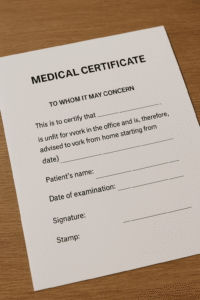
Your doctor will then prepare the certificate, which should include essential information such as the date of examination, your identifying information, the healthcare provider’s details and credentials, relevant medical information appropriate for the certificate’s purpose, recommended period of absence if applicable, any work restrictions or modifications, and the doctor’s signature and official stamp or letterhead.
What Should Be Included in a Medical Certificate?
A valid medical certificate should contain specific information while respecting patient privacy. The document must include the date of issuance and examination, patient’s full name, doctor’s name and professional credentials, medical practice or clinic information including contact details, and the doctor’s signature and professional stamp.
Regarding medical information, the certificate should state whether the patient is fit or unfit for work or activity, specify the duration of recommended absence if applicable, and note any restrictions or modified duties required. Importantly, the certificate should include only medical information relevant to the purpose of the certificate.
Medical certificates should respect patient confidentiality by not including unnecessary detailed diagnoses unless specifically required. Most employers and institutions only need to know that you have a legitimate medical reason for absence, not intimate details about your condition.
Common Mistakes to Avoid
Several common errors can make your medical certificate invalid or problematic. Avoid requesting a backdated certificate, as most medical professionals cannot ethically issue certificates for dates when they didn’t examine you. If you forgot to get a certificate during your appointment, you’ll need to schedule another visit.
Never alter or modify any information on a medical certificate after it’s been issued, as this constitutes fraud and can result in serious consequences including termination of employment or legal action.
Don’t assume all doctors provide certificates for any requested duration. Healthcare professionals must base their recommendations on actual medical necessity and their professional judgment. Requesting certificates for longer than medically justified puts doctors in an uncomfortable ethical position.
Ensure you understand exactly what your employer or institution requires before seeing your doctor. Some organizations have specific forms that need to be completed, while others accept standard certificates. Knowing these requirements prevents unnecessary additional visits.
Digital Medical Certificates
Many healthcare systems are transitioning to digital medical certificates, which offer several advantages over traditional paper documents. Digital certificates reduce the risk of loss or damage, can be transmitted instantly to employers or institutions, are more difficult to forge or alter, and can be easily stored and retrieved when needed.
However, not all organizations accept digital certificates, so verify acceptance before relying solely on electronic documentation. Some jurisdictions have specific regulations about digital medical certificate formats and security requirements.
Privacy and Confidentiality Considerations
Medical certificates involve a delicate balance between providing necessary information and protecting patient privacy. Healthcare professionals are bound by confidentiality laws and should only include information essential for the certificate’s purpose.
You have the right to discuss with your doctor what information will be included on your certificate. If you have concerns about specific details being shared with your employer, have this conversation before the certificate is written.
Employers are also bound by privacy laws and cannot share your medical information with others without your consent. They should securely store medical certificates and limit access to authorized personnel only.
Cost Considerations
The cost of obtaining a medical certificate varies significantly depending on your location and healthcare system. In countries with universal healthcare, certificates related to public health matters or work absences may be provided at no additional cost if obtained during a regular covered appointment.
However, many jurisdictions allow doctors to charge a fee for medical certificates, as these administrative tasks fall outside standard medical care. Fees typically range from twenty to one hundred dollars or equivalent currency, depending on the complexity of the certificate and regional pricing standards.
Some health insurance plans cover the cost of medical certificates, while others don’t consider them medically necessary services. Check your insurance policy or ask your provider about coverage before your appointment.
Legal Aspects and Fraud Prevention
Medical certificates are legal documents, and providing false medical certificates or using forged documents can result in serious consequences. Employees discovered using fraudulent medical certificates may face disciplinary action including termination, legal prosecution, and criminal records that can affect future employment.
Healthcare professionals who knowingly issue false certificates risk losing their medical licenses and face legal penalties. This is why reputable doctors take the documentation process seriously and won’t issue certificates without proper examination.
Employers have various methods to verify the authenticity of medical certificates, including contacting the issuing doctor’s office, verifying the doctor’s credentials and practice existence, checking for signs of forgery or alteration, and noting inconsistencies in the certificate’s format or information.
International Considerations
If you need a medical certificate for international purposes, additional requirements may apply. The document may need to be translated into the destination country’s official language by a certified translator, require notarization or apostille certification for legal recognition abroad, or follow specific formatting requirements depending on the purpose and destination.
Some countries have mutual recognition agreements for medical certificates, while others require specific local certification. Research requirements well in advance if you need international medical documentation.
Telehealth and Medical Certificates
The rise of telehealth services has changed how medical certificates can be obtained. Many jurisdictions now allow doctors to issue medical certificates following virtual consultations for certain conditions. Telehealth certificates are particularly useful for minor illnesses that don’t require physical examination, follow-up consultations for ongoing conditions, and situations where in-person visits are difficult due to mobility issues or location.
However, some certificates still require in-person examination, especially for fitness-to-work certifications, pre-employment medicals, and sports participation clearances. Verify whether your required certificate can be issued via telehealth before booking a virtual appointment.
Tips for a Smooth Process
To make obtaining your medical certificate as efficient as possible, schedule your appointment as soon as you realize you need certification. Bring any required forms from your employer or institution to your appointment. Prepare to clearly explain your symptoms and how they affect your ability to work or participate in activities.
Keep copies of all medical certificates for your personal records. This documentation can be valuable if questions arise later or if you need to provide additional information to support ongoing health issues.
Understand your organization’s process for submitting medical certificates, including deadlines and whether they accept electronic submission. Some employers require certificates within a specific timeframe after returning to work.
Conclusion
Medical certificates play a crucial role in documenting health status for employment, education, sports, and various other purposes. Understanding what they are, when you need them, how to obtain them properly, and what they should contain helps ensure you’re prepared when certification becomes necessary.
Always work with licensed healthcare professionals, be honest about your symptoms and needs, respect the professional boundaries and ethical obligations of medical practitioners, and familiarize yourself with your employer’s or institution’s specific requirements. Keep proper records of all medical documentation for future reference.
By following these guidelines and understanding the ABCs of medical certificates, you’ll be well-equipped to navigate the certification process whenever the need arises. Remember that medical certificates serve important functions in protecting both employees’ health rights and employers’ legitimate interests in workplace management, creating a system that benefits everyone when used appropriately and honestly.