Myth vs. Reality: Are Online Medical Certificates Legally Valid?
Medical Certificates
Medical Certificates
In an era where telehealth has transformed how we access healthcare, one question continues to spark debate in workplaces, schools, and legal circles: Are online medical certificates actually legitimate? With the convenience of virtual doctor visits now at our fingertips, understanding the legal standing of digital medical documentation has never been more important.
The Rise of Telemedicine and Digital Documentation
The COVID-19 pandemic accelerated a healthcare revolution that was already underway. Telehealth visits surged from a niche service to a mainstream healthcare delivery method, with millions of patients consulting doctors via video calls from their living rooms. This shift naturally extended to medical certificates, with healthcare providers increasingly issuing digital documentation for sick leave, disability claims, and other medical purposes.
But convenience has bred skepticism. Many people wonder whether a medical certificate obtained through a fifteen-minute video consultation carries the same weight as one issued after an in-person examination. The short answer is more nuanced than you might expect.
The Legal Framework: What Makes a Medical Certificate Valid?
To understand the validity of online medical certificates, we first need to examine what makes any medical certificate legally valid, regardless of how it’s issued.
Core Requirements for Validity
A legitimate medical certificate, whether digital or paper-based, must meet several fundamental criteria. First and foremost, it must be issued by a licensed healthcare professional who is legally authorized to practice medicine in the relevant jurisdiction. This seems obvious, but it’s the foundation upon which all other requirements rest.
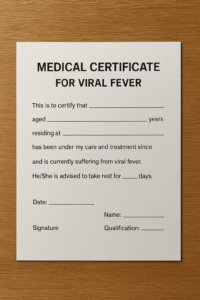
The certificate must contain specific information including the patient’s identifying details, the date of examination or consultation, the healthcare provider’s credentials and contact information, and typically a statement about the patient’s medical condition or fitness for work or other activities. Many jurisdictions also require the document to be signed or authenticated by the issuing practitioner, though the form this authentication takes can vary.
Critically, the medical opinion documented in the certificate must be based on an actual clinical assessment. This is where the conversation about online certificates becomes more complex, because the nature of what constitutes an adequate assessment can differ depending on the medical situation.
Myth #1: Online Medical Certificates Aren’t “Real” Medical Documents
Reality: When properly issued, online medical certificates are legally equivalent to those issued in person.
This is perhaps the most pervasive misconception. The medium of delivery does not inherently determine a document’s legal validity. A medical certificate issued following a legitimate telehealth consultation by a licensed physician holds the same legal weight as one issued after an office visit, provided it meets all the necessary requirements.
Courts and regulatory bodies across multiple jurisdictions have consistently recognized telehealth consultations as legitimate medical encounters. The American Medical Association, for instance, has established clear guidelines stating that telemedicine relationships are subject to the same standards of care as in-person relationships. This principle extends to documentation produced through these encounters.
The key distinction isn’t between online and offline, but between legitimate and illegitimate. A properly conducted video consultation with appropriate examination, diagnosis, and documentation produces a valid medical certificate. A fraudulent service that sells certificates without any real medical assessment does not, regardless of whether it operates online or through a physical storefront.
Myth #2: Employers Can Refuse to Accept Online Medical Certificates
Reality: Employers generally cannot discriminate against legitimately issued online medical certificates.
Many workers worry that their employer will reject a medical certificate simply because it was issued through a telehealth platform. In most jurisdictions, this concern is unfounded from a legal perspective.
Employment law typically requires employers to accept medical certificates that meet statutory requirements, without imposing additional conditions about the method of consultation. If a jurisdiction’s law states that an employee must provide a medical certificate from a registered practitioner, and the online certificate meets that criterion, an employer cannot arbitrarily reject it because the consultation was virtual.
That said, employers do retain certain rights. They can verify the authenticity of any medical certificate by contacting the issuing provider. They can also require certificates to contain specific information mandated by law or workplace policy. What they cannot do is establish a blanket policy refusing all online medical certificates while accepting equivalent in-person documentation.
Some employers have attempted to challenge online certificates by questioning whether a proper medical assessment could occur virtually. However, with telehealth now firmly established in mainstream healthcare, these arguments have become increasingly difficult to sustain, particularly for conditions that don’t require physical examination for diagnosis.
Myth #3: All Online Medical Certificate Services Are the Same
Reality: There’s a vast difference between legitimate telehealth platforms and fraudulent certificate mills.
Not all online medical certificate services are created equal, and this is where consumers need to exercise significant caution. The digital space includes both reputable telehealth platforms staffed by licensed physicians and unscrupulous operations that essentially sell fake documents.
Legitimate telehealth services conduct real medical consultations. They verify patient identity, review medical history, conduct symptom assessments through video consultation, apply clinical judgment to diagnose conditions, and issue certificates based on genuine medical opinions. These services maintain proper medical records and comply with healthcare regulations.
In contrast, fraudulent certificate mills operate very differently. They may not involve any actual doctor-patient consultation, require minimal or no symptom information, guarantee certificates regardless of the patient’s actual condition, lack proper licensing or regulatory oversight, and operate in legal grey zones or outright illegality.
Using a fraudulent service carries significant risks beyond just having a certificate rejected. It can constitute fraud, lead to employment termination, result in criminal charges in some jurisdictions, and invalidate insurance claims or other benefits that depend on the medical documentation.
When Are Online Medical Certificates Appropriate?
Understanding when online medical certificates are suitable requires recognizing the limitations of telehealth assessments. Virtual consultations work well for certain conditions but are inappropriate for others.
Appropriate Situations
Online medical certificates are generally appropriate for straightforward conditions that don’t require hands-on physical examination. These include common illnesses like upper respiratory infections, seasonal allergies, or viral conditions where diagnosis is based primarily on symptom presentation. Mental health conditions, which are increasingly managed through telepsychiatry, are also well-suited to virtual assessment.
Follow-up appointments for previously diagnosed conditions, medication renewals where no new examination is needed, and situations where the patient has clear, visible symptoms that can be assessed via video also fall within appropriate parameters for online certification.
Situations Requiring In-Person Evaluation
Conversely, certain situations demand in-person medical assessment. Conditions requiring physical examination such as suspected fractures, abdominal pain that might indicate serious conditions, or cardiovascular symptoms generally cannot be adequately assessed virtually. Situations requiring diagnostic testing like blood work, imaging studies, or other laboratory tests also necessitate in-person care.
Any potentially serious or life-threatening condition should prompt immediate in-person evaluation rather than a telehealth consultation. Responsible telehealth providers will recognize these limitations and direct patients to emergency departments or urgent care facilities when appropriate.
Legal Considerations Across Different Contexts
The legal validity of online medical certificates can vary depending on the context in which they’re used.
Workplace Sick Leave
For standard workplace sick leave, online medical certificates are generally accepted across most jurisdictions. Employment legislation typically requires employees to provide evidence of illness from a qualified medical practitioner without specifying the consultation method. As long as the certificate meets statutory requirements, employers must accept it.
However, some nuances exist. For extended sick leave or conditions that might affect workplace safety, employers may have legitimate grounds to request more comprehensive medical assessment. Workers in safety-sensitive positions might face additional scrutiny regarding the adequacy of virtual assessment for their particular conditions.
Insurance Claims
Insurance companies have been more cautious in accepting online medical certificates, particularly for disability or income protection claims. Many insurers require comprehensive medical evidence that may exceed what can be obtained through a single telehealth consultation.
That said, insurance law generally prohibits arbitrary discrimination against telehealth services. If an online consultation provides equivalent medical evidence to what would be obtained in person, insurers cannot reject claims solely based on consultation method. However, they can require additional evidence if the initial documentation is insufficient for claims assessment.
Legal Proceedings
In legal contexts, such as court proceedings or workers’ compensation cases, online medical certificates face heightened scrutiny. Courts evaluate medical evidence based on its probative value and reliability, which depends more on the thoroughness of the assessment than the consultation method.
A comprehensive telehealth evaluation with detailed documentation may be more valuable than a cursory in-person visit. However, legal proceedings often require expert medical testimony, and the strength of that testimony depends on the depth of the medical assessment, which may be limited in virtual consultations for certain conditions.
Educational Institutions
Schools and universities generally accept online medical certificates for absence documentation, particularly following the normalization of telehealth during the pandemic. However, some institutions maintain policies requiring in-person evaluation for extended absences or when academic accommodations are requested.
Students should review their institution’s specific policies, as requirements can vary significantly. For minor illnesses causing short-term absences, online certificates are widely accepted. For more complex situations involving disability accommodations or medical withdrawals, institutions may require more extensive documentation.
How to Ensure Your Online Medical Certificate Is Valid
If you’re considering obtaining a medical certificate through a telehealth service, several steps can help ensure the documentation will be legally valid and accepted.
Choose a Reputable Provider
Research the telehealth platform thoroughly before using it. Verify that it employs licensed medical professionals who are registered in your jurisdiction. Check whether the service is affiliated with established healthcare organizations or has proper regulatory accreditation. Read reviews and check for complaints with consumer protection agencies or medical boards.
Legitimate services will clearly display information about their practitioners’ qualifications and registration numbers. They’ll have transparent processes for how consultations are conducted and won’t guarantee certificates before assessing your condition.
Ensure a Proper Consultation Occurs
A valid medical certificate must be based on an actual clinical assessment. This means you should have a real-time consultation with a healthcare provider, whether through video, phone, or comprehensive online questionnaire reviewed by a doctor. Be prepared to provide detailed symptom information, medical history, and any relevant background that would inform diagnosis.
Be wary of services that issue certificates without any meaningful interaction with a healthcare provider. If you’re not asked substantive questions about your condition, the assessment is likely inadequate.
Verify Certificate Contents
Check that your medical certificate includes all necessary information. This typically includes your full name and date of birth, the consultation date, the healthcare provider’s name, registration number, and contact details, a statement about your medical condition or fitness for your usual activities, and the provider’s signature or digital authentication.
Some jurisdictions have specific requirements for medical certificates, so verify what information is needed for your particular purpose.
Maintain Supporting Documentation
Keep records of your telehealth consultation, including appointment confirmations, consultation notes if provided, payment receipts, and any follow-up recommendations. This documentation can substantiate the legitimacy of your certificate if it’s questioned.
The Future of Medical Certification
The trajectory of healthcare delivery points toward increasing integration of virtual and in-person care. As telehealth becomes more sophisticated, with technologies enabling remote monitoring, AI-assisted diagnosis, and more comprehensive virtual examinations, the distinction between online and offline medical certificates may become less meaningful.
Regulatory frameworks are evolving to keep pace with these changes. Many jurisdictions are updating healthcare regulations to explicitly address telehealth documentation, providing clearer guidance on when virtual consultations are appropriate and what standards apply to digital medical certificates.
Blockchain technology and digital verification systems may also transform how medical certificates are issued and verified, potentially reducing fraud while making legitimate certificates easier to authenticate. These technological advances could address many current concerns about the validity and security of online medical documentation.
Final Verdict: Separating Myth from Reality
So, are online medical certificates legally valid? The answer is an unequivocal yes—when they’re issued properly by licensed healthcare professionals following legitimate medical consultations. The format or medium of healthcare delivery doesn’t determine validity; the quality and legitimacy of the medical assessment does.
The myths surrounding online medical certificates often stem from confusion between reputable telehealth services and fraudulent operations, or from outdated assumptions about virtual healthcare. As telehealth has matured into a standard healthcare delivery model, legal and regulatory frameworks have increasingly recognized that properly conducted virtual consultations produce documentation with equivalent validity to in-person visits.
However, this doesn’t mean all online medical certificates are beyond question. The responsibility falls on patients to use legitimate services, on healthcare providers to maintain appropriate standards in virtual consultations, and on employers and institutions to evaluate certificates based on their medical and legal sufficiency rather than assumptions about consultation methods.
Understanding the difference between myth and reality when it comes to online medical certificates empowers you to access convenient healthcare while ensuring your documentation meets legal and professional requirements. As with any healthcare service, the key is choosing reputable providers, ensuring proper medical assessment, and obtaining documentation that meets the specific requirements of your situation.
The convenience of telehealth is here to stay, and with it, the online medical certificate has earned its place as a legitimate form of medical documentation. What matters is not whether your doctor saw you through a screen or across an examination table, but whether they conducted a proper assessment and documented it appropriately. That’s the reality that cuts through all the myths.