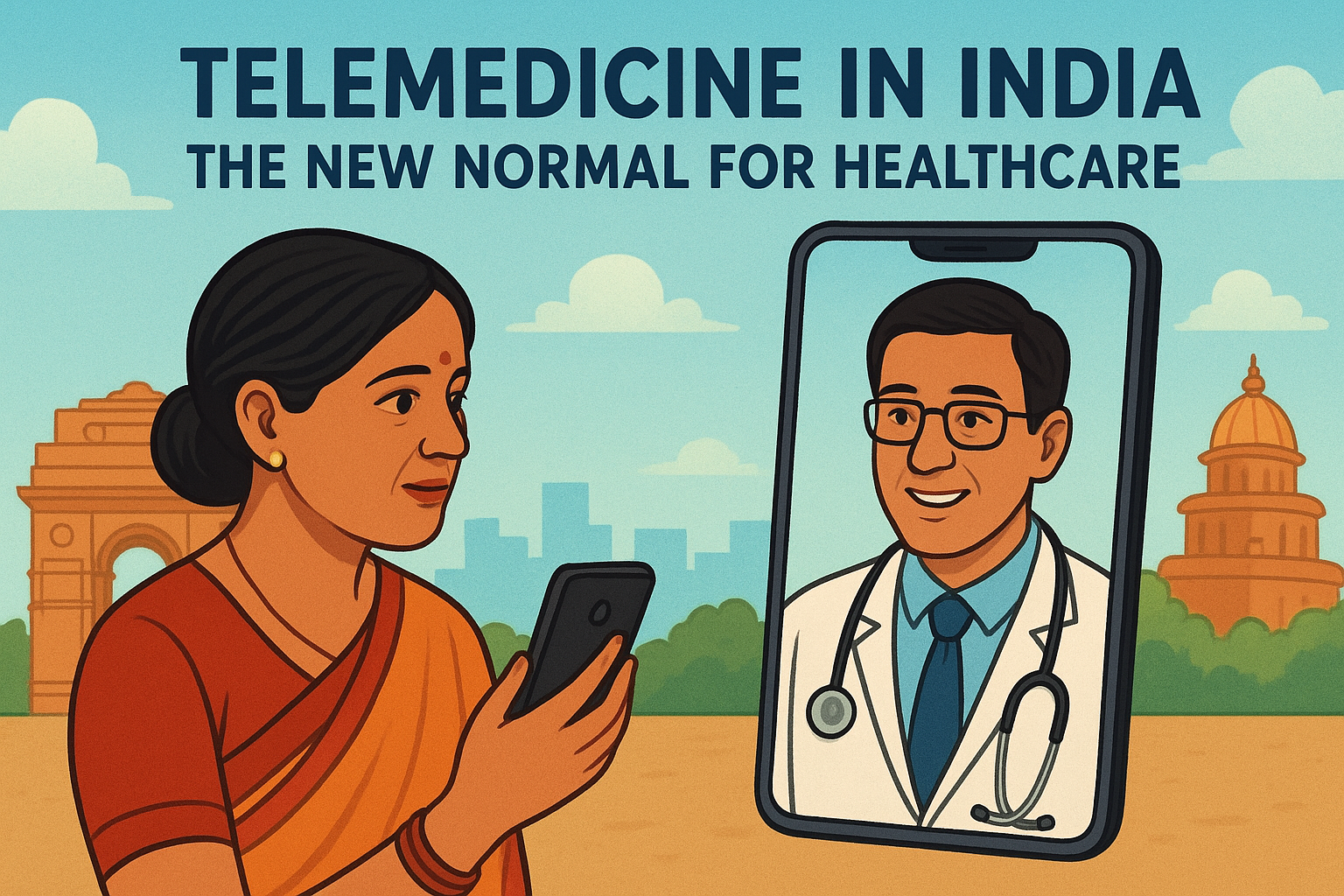
Telemedicine in India: The New Normal for Healthcare
Healthcare
Healthcare
The landscape of healthcare in India has undergone a dramatic transformation over the past few years. What was once considered a futuristic concept has rapidly become an integral part of everyday medical practice. Telemedicine, the delivery of healthcare services through digital platforms, has emerged as the new normal, fundamentally changing how millions of Indians access medical care.
The Rise of Digital Healthcare
India’s telemedicine journey represents one of the most significant healthcare revolutions in the country’s modern history. With a population exceeding 1.4 billion people and a significant urban-rural divide in healthcare accessibility, the adoption of telemedicine has addressed long-standing challenges in the Indian healthcare system.
The pandemic accelerated this transformation exponentially. When physical distancing became necessary and hospitals were overwhelmed, telemedicine stepped in to bridge the gap. What might have taken a decade to achieve happened in mere months. Patients who had never used a smartphone for anything beyond calls suddenly found themselves consulting doctors through video calls. Healthcare providers who were skeptical about virtual consultations quickly adapted to this new reality.
Today, telemedicine is no longer just an emergency alternative. It has become a preferred choice for many Indians seeking convenient, efficient, and often more affordable healthcare services.
Breaking Down Barriers to Healthcare Access
One of the most profound impacts of telemedicine in India has been its role in democratizing healthcare access. The country has long struggled with uneven distribution of medical resources, with urban areas having significantly better healthcare infrastructure compared to rural regions.
Consider the reality that nearly 70% of India’s population lives in rural areas, yet most specialist doctors practice in cities. A patient in a remote village previously had to travel hundreds of kilometers, spend considerable money on transportation and accommodation, and lose multiple days of work just to see a specialist for a 15-minute consultation. Telemedicine has fundamentally disrupted this paradigm.
Farmers in Maharashtra can now consult dermatologists in Mumbai. Pregnant women in Assam can receive prenatal guidance from obstetricians in Delhi. Elderly patients with chronic conditions in Kerala can have regular follow-ups with their doctors without leaving their homes. This convenience has not only improved health outcomes but has also reduced the financial burden on families who previously spent substantial amounts on travel and accommodation for medical consultations.
The language barrier, another significant challenge in India’s diverse linguistic landscape, is also being addressed. Many telemedicine platforms now offer multilingual support, enabling patients to communicate in their preferred language, whether it’s Hindi, Tamil, Bengali, or any of India’s numerous regional languages.
Technology Driving the Revolution
The telemedicine boom in India has been fueled by several technological factors converging at the right time. The widespread availability of affordable smartphones has been a game-changer. India now has over 750 million smartphone users, providing a massive base for digital health services.
Internet penetration, particularly in rural areas, has improved dramatically with initiatives like BharatNet aiming to connect villages with high-speed internet. While challenges remain, the foundation for digital connectivity is stronger than ever before.
The development of user-friendly telemedicine platforms has made virtual healthcare accessible even to those with limited digital literacy. Apps have been designed with simple interfaces, vernacular language options, and features like voice commands that make them easier to navigate for older adults and first-time users.
Artificial intelligence and machine learning are increasingly being integrated into telemedicine platforms. These technologies help with preliminary symptom assessment, appointment scheduling, and even predicting potential health issues based on patient history. Some platforms use AI-powered chatbots for initial triage, helping route patients to the appropriate level of care.
Regulatory Framework and Government Support
The Indian government has played a crucial role in legitimizing and promoting telemedicine. The Telemedicine Practice Guidelines issued by the Ministry of Health and Family Welfare in 2020 provided much-needed clarity on the legal and ethical aspects of virtual consultations. These guidelines addressed concerns about patient safety, data privacy, and professional liability, giving both doctors and patients confidence in using telemedicine services.
The National Digital Health Mission, now known as the Ayushman Bharat Digital Mission, aims to create a comprehensive digital health ecosystem in India. This initiative includes creating unique health IDs for citizens, digitizing health records, and establishing a network of health facilities and professionals on a digital platform. Telemedicine is a cornerstone of this vision.
State governments have also launched their own telemedicine initiatives. Programs like Karnataka’s Sanjeevani and Tamil Nadu’s eHealth initiatives have brought virtual healthcare to government hospitals and primary health centers, ensuring that even those who cannot afford private telemedicine services have access to digital healthcare.
The Economic Impact
The telemedicine sector in India has witnessed exponential growth, attracting significant investment from both domestic and international players. The market, valued at around 830 million dollars in 2019, has grown multiple times since then, with projections suggesting it could reach several billion dollars in the coming years.
This growth has created a new ecosystem of healthcare startups, technology providers, and service platforms. Companies are innovating in areas ranging from doctor consultation apps to chronic disease management platforms, from mental health services to specialized care for conditions like diabetes and hypertension.
The economic benefits extend beyond the healthcare sector. By reducing the need for travel and time off work, telemedicine saves patients money and increases productivity. A study estimated that patients save an average of several hours per consultation when using telemedicine instead of visiting a clinic physically.
For healthcare providers, telemedicine has opened new revenue streams and expanded their reach. Doctors can now serve patients across geographic boundaries, and hospitals can extend their services beyond their physical walls. This has been particularly beneficial for smaller clinics and individual practitioners who can now compete more effectively with larger healthcare institutions.
Transforming Specific Healthcare Areas
Certain medical specialties have particularly benefited from the telemedicine revolution in India. Mental healthcare, long stigmatized and underserved in India, has found a new avenue through telepsychiatry and online counseling services. The privacy and convenience of virtual sessions have encouraged more people to seek help for mental health issues. Platforms dedicated to mental wellness have seen tremendous uptake, especially among younger Indians who are more comfortable with digital services.
Chronic disease management has been transformed through telemedicine. Patients with diabetes, hypertension, heart disease, or other long-term conditions require regular monitoring and follow-ups. Telemedicine enables continuous care without the burden of frequent hospital visits. Many platforms now integrate with wearable devices and home monitoring equipment, allowing doctors to track patient metrics in real-time.
Radiology and pathology have embraced telehealth through the sharing and interpretation of images and test results. A radiologist in Bangalore can now analyze scans for patients in Srinagar, ensuring that expert opinions are available regardless of location.
Maternal and child healthcare has seen significant improvements through telemedicine. Prenatal consultations, postpartum follow-ups, and pediatric care can now be provided remotely, which is especially beneficial in areas with limited access to gynecologists and pediatricians.
Challenges That Remain
Despite the remarkable progress, telemedicine in India faces several challenges that need to be addressed for sustained growth and effectiveness. Digital literacy remains a significant barrier, particularly among older adults and in rural areas. While younger family members often help bridge this gap, there’s a need for more intuitive interfaces and better patient education.
The digital divide persists. While internet penetration has improved, connectivity issues, especially in remote areas, can disrupt consultations. Not everyone has access to smartphones or computers, and data costs, though decreasing, can still be prohibitive for economically disadvantaged populations.
Data privacy and security concerns are paramount. With sensitive health information being transmitted digitally, there are legitimate worries about data breaches and misuse. While regulations exist, enforcement and compliance need to be strengthened.
The limitation of physical examination in virtual consultations is inherent. While telemedicine works well for follow-ups, routine consultations, and many acute issues, certain conditions require hands-on examination, diagnostic tests, or procedures that cannot be done remotely. Determining what can and cannot be effectively handled through telemedicine remains an ongoing challenge.
Quality control and standardization across platforms vary considerably. Not all telemedicine services maintain the same standards of care. There’s a need for better regulation and accreditation to ensure patients receive consistent, high-quality care regardless of which platform they use.
The Doctor-Patient Relationship in the Digital Age
One concern that emerged with the rise of telemedicine was its potential impact on the doctor-patient relationship. Traditional medicine emphasizes the importance of the personal connection between doctor and patient, built through face-to-face interactions. Skeptics worried that virtual consultations might diminish this crucial aspect of healthcare.
However, experience has shown that meaningful therapeutic relationships can indeed develop through digital platforms. Many patients report feeling comfortable and well-cared-for in virtual consultations. The convenience factor often means patients are more regular with follow-ups, leading to better continuity of care.
Doctors have adapted their communication styles for the digital medium. Many have learned to be more attentive to verbal cues since body language can be harder to read through a screen. The enforced face-to-face nature of video calls, where the doctor gives undivided attention, can sometimes create a more focused interaction than busy clinic settings where distractions are common.
Nevertheless, the best model appears to be hybrid care, where telemedicine complements rather than completely replaces in-person visits. Initial consultations or complex cases often benefit from physical examination, while follow-ups and routine check-ins work well virtually.
Looking Ahead: The Future of Telemedicine in India
The trajectory of telemedicine in India points toward continued growth and integration into mainstream healthcare. Several trends are likely to shape its future. Integration with advanced technologies like artificial intelligence, machine learning, and the Internet of Things will make telemedicine more predictive and personalized. Wearable devices that continuously monitor vital signs will feed data to AI systems that can alert doctors to potential problems before they become serious.
Virtual reality and augmented reality could enhance telemedicine consultations, making them more immersive and informative. Imagine a patient being able to visualize their medical condition or treatment plan through AR, or medical students learning procedures through VR simulations guided by experts miles away.
Expansion of services beyond consultations is already underway. Tele-ICUs where critical care specialists remotely monitor ICU patients, telesurgery where experts guide procedures from distant locations, and telepathology where tissue samples are analyzed remotely are all becoming reality.
Greater collaboration between traditional healthcare systems and telemedicine platforms will create seamless care pathways. Electronic health records will enable information to flow smoothly between in-person and virtual care, ensuring continuity and coordination.
Policy evolution will continue as regulators balance innovation with safety and quality. Issues like cross-border telemedicine, reimbursement models, and professional licensing for interstate practice will need to be addressed.

Conclusion
Telemedicine in India has transitioned from being an experimental concept to becoming the new normal in healthcare delivery. It has proven to be not just a temporary solution to extraordinary circumstances but a lasting transformation that addresses fundamental challenges in India’s healthcare system.
The democratization of healthcare access, the convenience it offers, the economic benefits it generates, and the innovative solutions it enables make telemedicine an indispensable part of India’s healthcare future. While challenges remain, the trajectory is clear and promising.
As India continues its digital transformation, healthcare stands as one of the sectors where technology has made the most tangible difference in people’s lives. From metropolitan cities to remote villages, from routine consultations to specialized care, telemedicine is reshaping how Indians think about and access healthcare.
The new normal is here, and it’s digital. But at its core, healthcare remains about people caring for people. Technology is simply the tool that’s making that care more accessible, efficient, and effective for millions across India. As platforms evolve, regulations mature, and adoption deepens, telemedicine will continue to play a pivotal role in building a healthier India.