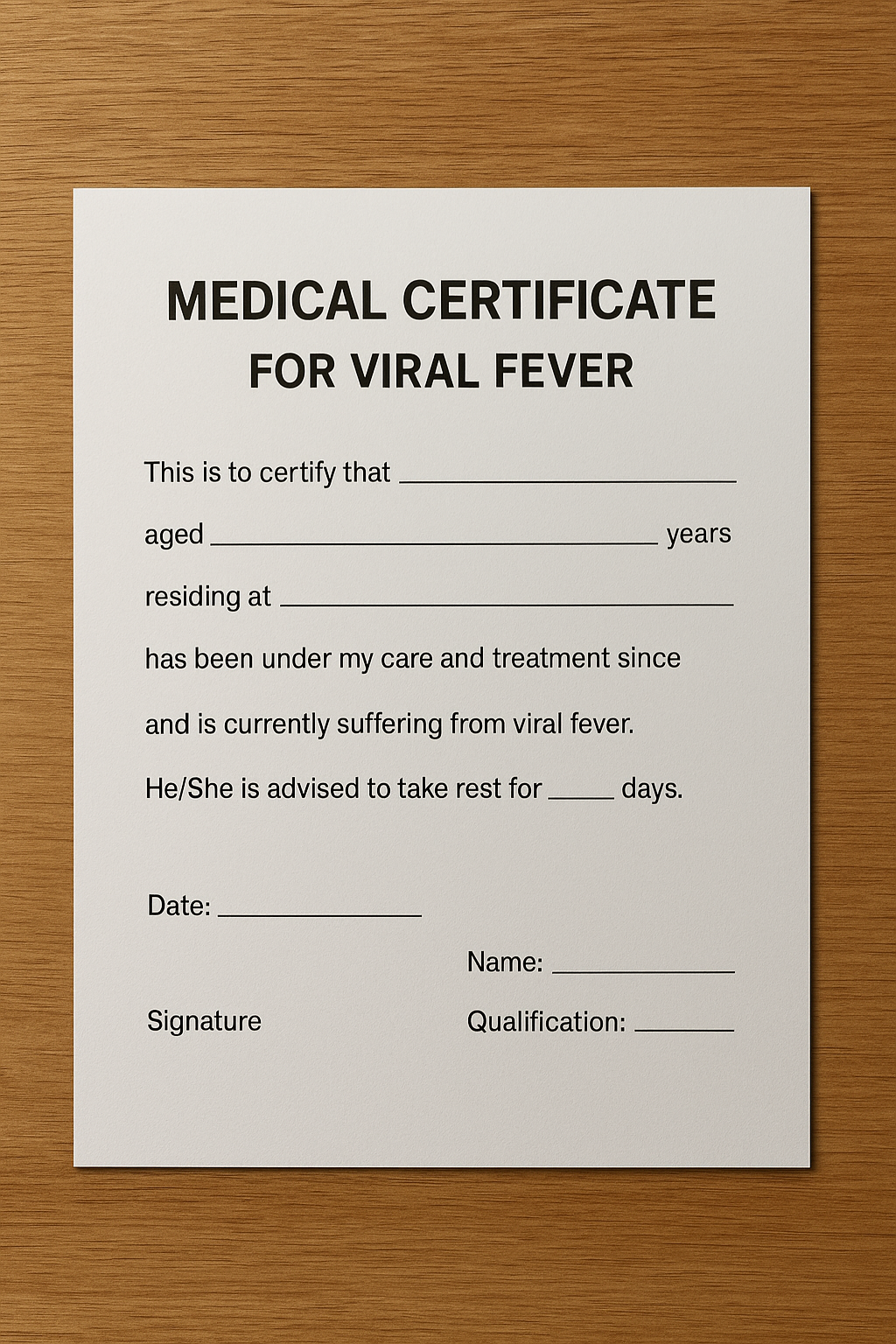
Medical Certificate for a Job: Everything You Need to Know
Introduction
Medical Certificate
In today’s professional world, health and productivity go hand in hand. Employers increasingly recognize the importance of ensuring that employees are medically fit for their roles—not only for their safety but also for the overall efficiency of the organization. This is where a medical certificate for a job comes into play.
A medical certificate acts as an official document issued by a licensed healthcare provider verifying that an individual is in a suitable state of health to perform specific job duties. Whether it’s for joining a new company, taking medical leave, or returning to work after an illness, medical certificates serve as a bridge between personal health and professional responsibility.
In this article, we’ll explore everything you need to know about medical certificates for employment, including their purpose, format, legal aspects, benefits, and how to obtain one—especially online.
What Is a Medical Certificate for a Job?
A medical certificate for a job is a formal document issued by a doctor or certified medical professional that confirms an individual’s physical or mental fitness for a particular position. It may also specify any medical conditions, restrictions, or limitations that could affect job performance.
In many workplaces—especially those involving physical labor, driving, healthcare, or food handling—medical certificates are mandatory before employment begins. However, even in office-based environments, some employers may request one to ensure the applicant is fit for regular work activities.
Sure! Here’s a 1,000-word English blog post titled “4 Medical Certificates for a Job: The Best Doctors to Get Yours From” — informative, SEO-optimized, and engaging for a health or employment-related website.
4 Medical Certificates for a Job: The Best Doctors to Get Yours From
When applying for a new job, one document that often goes unnoticed until the last minute is the medical certificate for a job. Whether you’re joining a corporate firm, a factory, or even a public institution, a medical certificate plays a vital role in verifying your physical and mental fitness to perform your duties effectively. Employers use it as an assurance that new hires are fit for the job and won’t face immediate health risks at work.
In this article, we’ll explore the four main types of medical certificates for employment, why they matter, and highlight the best doctors and clinics to get your certificate from—quickly, legally, and professionally.
What Is a Medical Certificate for a Job?
A medical certificate for a job is an official document issued by a licensed healthcare professional that states your health condition and fitness to work. It includes the doctor’s signature, medical registration number, date, and sometimes a stamp from a recognized clinic or hospital.
Employers request this certificate for several reasons:
- To ensure you are medically fit for specific physical or mental demands of the job.
- To comply with health and safety regulations in certain industries (e.g., construction, manufacturing, aviation).
- To maintain workplace health standards, especially in jobs that involve handling food, operating machinery, or working with patients.
The 4 Main Types of Medical Certificates for a Job
Different professions require different types of health certifications. Below are the four most common types of job-related medical certificates and when you might need them.
1. Pre-Employment Medical Certificate
A pre-employment medical certificate is the most common type. It confirms that you are physically and mentally capable of performing the tasks associated with your new job.
Typical checks include:
- Blood pressure and pulse
- Vision and hearing tests
- Height, weight, and BMI measurement
- Basic blood and urine tests
- Medical history review
For jobs involving heavy lifting or machinery, additional orthopedic or neurological assessments might be required.
Where to Get It:
The best doctors for pre-employment certificates are general physicians and occupational health specialists. In India, clinics like Apollo Clinic, Dr. Lal PathLabs, and Healthians offer comprehensive employment health packages with certified doctors.
2. Fitness-to-Work Certificate
Sometimes, after an illness, injury, or surgery, your employer might ask for a fitness-to-work certificate to ensure you’re ready to return safely.
This document states that:
- You have recovered fully or sufficiently to resume work.
- Your condition will not affect performance or safety.
- You are cleared for full or partial duties.
This certificate is essential in professions that involve manual labor, healthcare, or public service, where health directly impacts others.
Recommended Doctors:
You should visit your treating specialist (e.g., orthopedic surgeon, cardiologist, or general practitioner). For quick turnaround, online medical certificate platforms like MedicalCerts.in and GetMedCert can issue digital certificates after a teleconsultation.
3. Occupational Health Certificate
Certain industries require workers to meet strict health standards. An occupational health certificate confirms that the employee’s health meets those industry-specific regulations.
Examples include:
- Drivers needing vision and reflex tests.
- Factory workers needing respiratory function assessments.
- Nurses and healthcare workers requiring immunization status checks.
This certificate ensures not just your safety but also that of your coworkers and the public.
Best Doctors to Visit:
Consult occupational medicine specialists or clinics registered with national health authorities. Many multinational companies partner with doctors certified by the National Board of Occupational Health or equivalent associations.
4. Psychological Fitness Certificate
For high-stress or sensitive positions—like aviation, defense, law enforcement, and healthcare—a psychological fitness certificate is often required.
This certificate verifies:
- Emotional stability
- Stress tolerance
- Cognitive ability
- Absence of major psychological disorders
Top Professionals for This Certificate:
Only clinical psychologists or psychiatrists can issue valid psychological fitness certificates. Reputed institutions such as NIMHANS (Bangalore) and AIIMS (Delhi) provide standardized assessments and official documentation.
Choosing the Best Doctor for Your Job Medical Certificate
With so many online and offline options available, it’s crucial to choose the right doctor or clinic. Here’s how to identify the best one:
- Check Credentials:
Always ensure your doctor has a valid medical license and registration number (e.g., MCI or State Medical Council ID). - Choose Experience:
Doctors experienced in occupational or employment health understand the exact requirements employers expect. - Go for Recognized Clinics:
Large hospital chains and NABL-accredited labs provide certificates that are widely accepted across companies and government offices. - Opt for Digital Convenience:
If you’re short on time, online medical certificate services can save you hours. Many platforms allow same-day digital issuance after video consultation with a certified doctor.
How to Get a Medical Certificate for a Job – Step by Step
- Book an Appointment – Visit a nearby clinic or schedule an online consultation.
- Bring ID Proof – Carry your Aadhaar card, passport, or any government-issued ID.
- Medical Examination – The doctor will assess your vitals and conduct basic tests.
- Doctor’s Evaluation – The physician will determine your fitness for work.
- Certificate Issuance – You’ll receive a signed, dated, and stamped certificate—either printed or digital.
Always double-check that your name, date, doctor’s details, and clinic information are correct before submission.
Why a Genuine Certificate Matters
Submitting a fake or unofficial certificate can lead to severe consequences—ranging from job termination to legal action. Employers often verify certificates with issuing doctors or clinics, especially in regulated industries.
Authenticity ensures:
- Legal compliance
- Professional credibility
- Long-term employment security
Final Thoughts
A medical certificate for a job is more than just paperwork—it’s a bridge between your health and your professional future. Whether you’re starting a new role or returning after recovery, obtaining the right type of medical certificate from a qualified doctor ensures both safety and compliance.
If you want a smooth and legitimate process, choose certified doctors and trusted clinics. They not only provide accurate medical assessments but also ensure your certificate meets all legal and employer requirements.
Stay healthy, stay prepared, and always keep your medical documentation in order. After all, your career—and your well-being—go hand in hand.
Would you like me to make this blog SEO-optimized for Google (with meta title, description, and keywords) so it performs better on websites like WordPress or Blogger?
Key Components of a Medical Certificate
A standard medical certificate includes:
- Employee’s full name and date of birth
- Date of medical examination
- Diagnosis or condition (if applicable)
- Doctor’s remarks on fitness for duty
- Duration of medical leave or recovery period (if needed)
- Doctor’s signature, seal, and registration number
- Date of issue
This certificate serves as both a medical and legal document. Therefore, it must be accurate, authentic, and verifiable.
Why Employers Require a Medical Certificate
Employers may ask for a medical certificate for several reasons related to workplace safety, compliance, and productivity. Below are the most common scenarios where a certificate becomes essential.
1. Pre-Employment Health Screening
Before hiring, many organizations conduct pre-employment medical examinations to ensure the candidate is physically and mentally capable of performing job tasks. For instance, pilots, construction workers, and healthcare staff often need a “fit-to-work” medical certificate before they can begin employment.
2. Sickness or Injury Leave
When an employee takes medical leave due to illness or injury, employers may request a medical certificate to validate the absence. This helps prevent misuse of sick days and ensures transparency between employees and HR departments.
3. Return-to-Work Assessment
After recovering from a medical condition, employees may need a doctor’s confirmation stating they are fit to resume work duties. This is particularly important after surgery, accidents, or prolonged illnesses.
4. Compliance with Legal or Industry Regulations
Certain industries—like aviation, transportation, and healthcare—are legally bound to maintain strict health standards. Submitting medical certificates ensures compliance with occupational safety laws and protects both the employer and employee.
5. Occupational Health and Safety
Employers are responsible for maintaining a safe working environment. Requiring a medical certificate helps ensure that employees are not at risk of injury or exacerbating existing medical conditions while on the job.
Types of Medical Certificates for Employment
Medical certificates can vary depending on the purpose. Below are the most common types issued in relation to jobs:
1. Pre-Employment Fitness Certificate
This certificate confirms that an individual is medically fit for the position they are applying for. It may include physical examinations, laboratory tests, and vision or hearing assessments depending on the job role.
2. Sick Leave Certificate
Issued when an employee is unwell, this document verifies the illness and recommends a specific period for rest and recovery.
3. Fitness-to-Return Certificate
After a period of illness or injury, this certificate states that the employee has recovered sufficiently to return to their duties.
4. Job-Specific Medical Certificate
Certain industries require specialized certificates—like HGV driver medicals, food handler health certificates, or construction worker medical clearances—tailored to specific occupational risks.
5. Psychological Fitness Certificate
Some jobs, particularly those involving high stress or responsibility (such as law enforcement or military service), require mental health evaluations to ensure psychological stability.
Legal and Ethical Considerations
Because a medical certificate is a legal document, falsifying or misusing one can have serious consequences. Both employees and employers should understand their rights and responsibilities regarding medical documentation.
1. Employee’s Responsibility
- Provide accurate and truthful medical information.
- Obtain the certificate only from a licensed medical practitioner.
- Submit the document within the timeline specified by the employer or HR policy.
2. Employer’s Responsibility
- Maintain confidentiality of medical records.
- Use medical information solely for job-related decisions.
- Avoid discrimination based on health conditions unless directly relevant to job performance.
3. Legal Implications
Providing false information on a medical certificate is considered fraud in many jurisdictions and can result in disciplinary action, termination, or legal penalties.
How to Obtain a Medical Certificate for a Job
Traditionally, obtaining a medical certificate required visiting a doctor’s clinic or hospital. However, in today’s digital age, the process has become faster and more convenient through online medical certificate services.
1. In-Person Consultation
You can visit a general physician, occupational health clinic, or hospital. The doctor will:
- Conduct a physical examination
- Ask about your medical history
- Perform tests (if needed)
- Issue a printed, signed medical certificate
2. Online Consultation
Modern telemedicine platforms now offer digital medical certificates through online consultations. You simply:
- Book an appointment on a verified platform
- Consult a licensed doctor via video call or chat
- Receive a digital certificate by email (with an electronic signature and registration number)
This approach is ideal for professionals who need a certificate quickly, such as remote workers or those unable to travel due to illness.
Advantages of Online Medical Certificates
The rise of telehealth has made obtaining a medical certificate more accessible and efficient. Here are the top benefits:
1. Convenience
No need to commute or wait in long queues—consult a doctor from the comfort of your home or office.
2. Speed
In most cases, you can receive your certificate within minutes after the consultation.
3. Accessibility
Online medical certificates are especially beneficial for remote areas or people with limited mobility.
4. Confidentiality
Reputable telemedicine services protect patient information with advanced data encryption and privacy policies.
5. Legitimacy
Digital certificates are legally recognized if issued by a registered medical practitioner with a verifiable license.
Tips for Employees Requesting a Medical Certificate
If you’re required to submit a medical certificate to your employer, keep the following in mind:
- Consult early – Don’t wait until the last moment; some certificates require examination or test results.
- Be transparent – Provide honest details about your health to ensure accuracy.
- Follow company policies – Each organization has specific rules regarding the format, timing, and submission of medical documents.
- Keep a copy – Always retain a personal copy for your own records.
- Use verified doctors – Ensure your certificate is signed and stamped by a recognized professional to avoid rejection.
For Employers: Best Practices When Handling Medical Certificates
Employers should treat medical certificates with professionalism and confidentiality. Here are key practices to follow:
- Verify authenticity: Confirm the doctor’s registration number if you suspect fraud.
- Avoid discrimination: Do not make employment decisions based solely on medical conditions unless required by law.
- Store securely: Keep medical documents confidential and limit access to HR personnel only.
- Stay compliant: Follow local labor laws and health regulations regarding employee medical records.
- Offer accommodations: If an employee has a temporary or chronic condition, consider reasonable adjustments to their workload.
Common Mistakes to Avoid
Both employees and employers should avoid the following pitfalls:
- Submitting incomplete or illegible certificates
- Using unauthorized templates or fake documents
- Ignoring deadlines for submission
- Employers disclosing employee health information without consent
- Assuming a certificate automatically guarantees employment (it only confirms health fitness)
Sample Format: Medical Certificate for a Job
Below is a simplified example of what a Medical Certificate for a Job might look like:
Medical Certificate for Employment
Name: _______________________________
Date of Birth: ________________________
Date of Examination: __________________
Condition/Remarks: ___________________
Doctor’s Comments: Fit for employment / Fit with restrictions / Unfit
Doctor’s Name: _______________________
License/Registration No.: _______________
Signature & Seal: _____________________
Date: ________________________________
This format ensures that all essential details are clearly documented and verifiable.
The Future of Medical Certificates
The integration of technology and healthcare continues to revolutionize administrative processes like medical certification. In the future, we can expect:
- Automated digital verification systems to prevent fraud
- Blockchain-based certificates ensuring authenticity and tamper-proof records
- AI-assisted health evaluations for faster and more accurate fitness assessments
Such advancements will make medical certification more secure, transparent, and globally accessible.
Conclusion
A medical certificate for a job is more than a formality—it’s a vital tool that safeguards both employees and employers. It ensures that workers are physically and mentally capable of performing their roles while maintaining workplace safety and legal compliance.
Whether obtained in person or online, a legitimate medical certificate represents integrity, responsibility, and professionalism. As the world shifts toward digital healthcare solutions, securing an online medical certificate has become not only convenient but also fully compliant with modern labor standards.